
Handsomely produced, the glossy visual flair of the new Australian staging of Agatha Christie classic And Then There Were None is let down by undercooked performances.
To follow the boffo success of the terrific recent Australian tour of The Mousetrap, the stage adaptation of the world’s best selling mystery novel of all time would seem a canny choice. Agatha Christie’s 1939 novel survived two earlier titles (rightly changed for appropriateness) and was adapted for the stage by the author herself in 1943. Frequently adapted for film and television, the tantalising mystery has baffled and entertained across the generations.
A mysterious host summons eight guests and two staff members to a grand island home. After a recorded gramophone message accuses each of murder, they start being knocked off one by one, the tension increasing as suspicion moves from an unknown assailant to the murderer actually being one of the ten.
A key aspect of the recent success of The Mousetrap was the meticulous direction by Robyn Nevin, which elevated the play with charming sparkle and flair. Returning to direct And Then There Were None, Nevin appears somewhat stymied by the lack of humour in the scenario, the focus on dramatic suspense leaving little room for the type of suave savoir-faire that potentially characterises a play set in 1930s Britain.
With ten characters to establish, And Then There Were None is initially bogged down by exposition, first introducing each guest and then unfurling the murderous backstory of each. Playing uncomfortable strangers, the cast members naturally come across as ill at ease, but that lack of comfort seems to extend to the whole performance, including challenges with accents for some.
Originally written in three acts, the interval for this production feels early as there has only been one death at this point and the concept of all the guests being dispatched is not yet clear; the benefit, however, is that acts two and three run together and the suspense ratchets up with uninterrupted flow.
The play as licensed comes with two endings, with Christie first having crafted a theatrical version of her novel’s ending and then having penned a slightly rosier ending for the play’s premiere during World War II. Nevin presents the powerful original ending that matches the novel, ending the evening on an unflinchingly dark note.
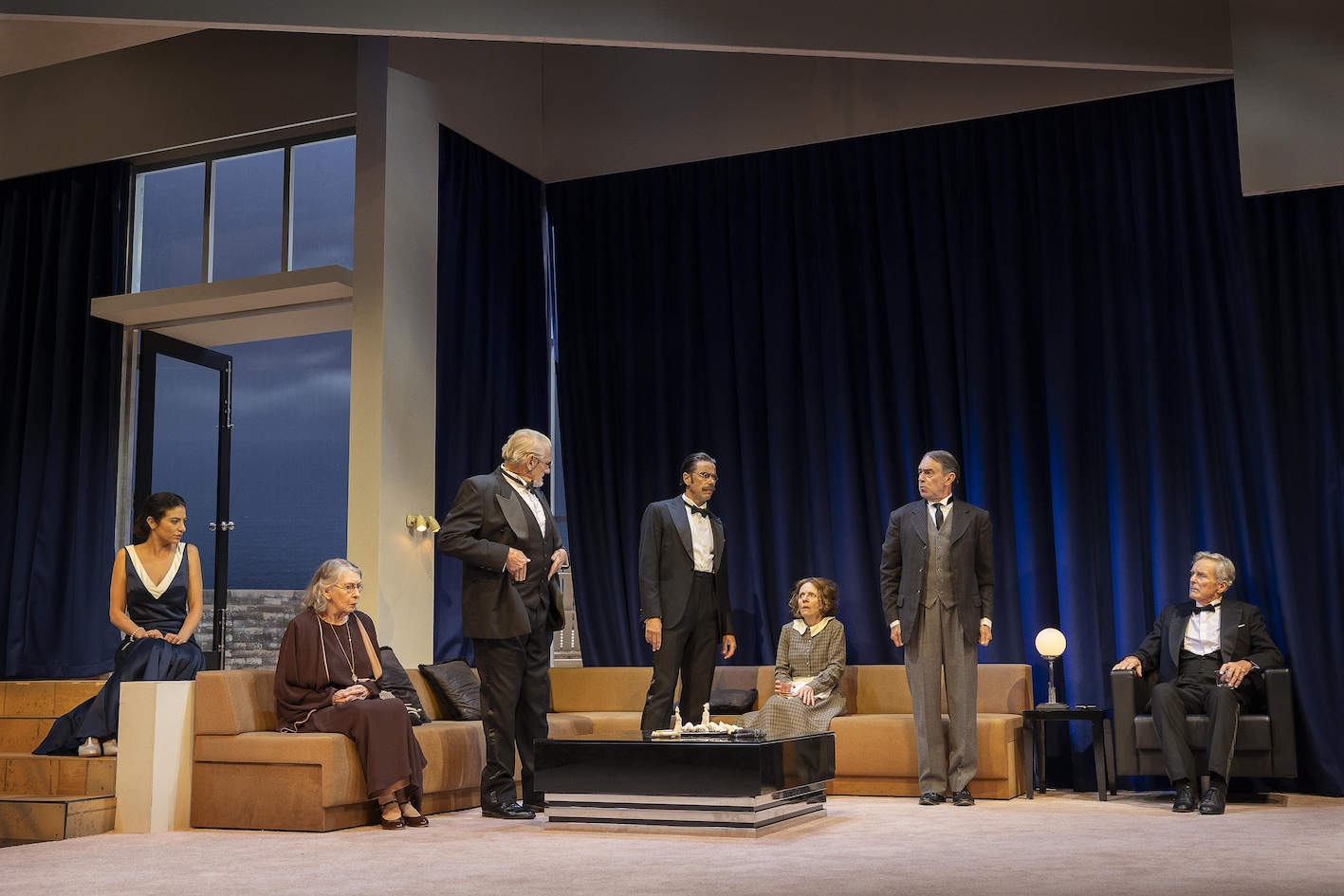
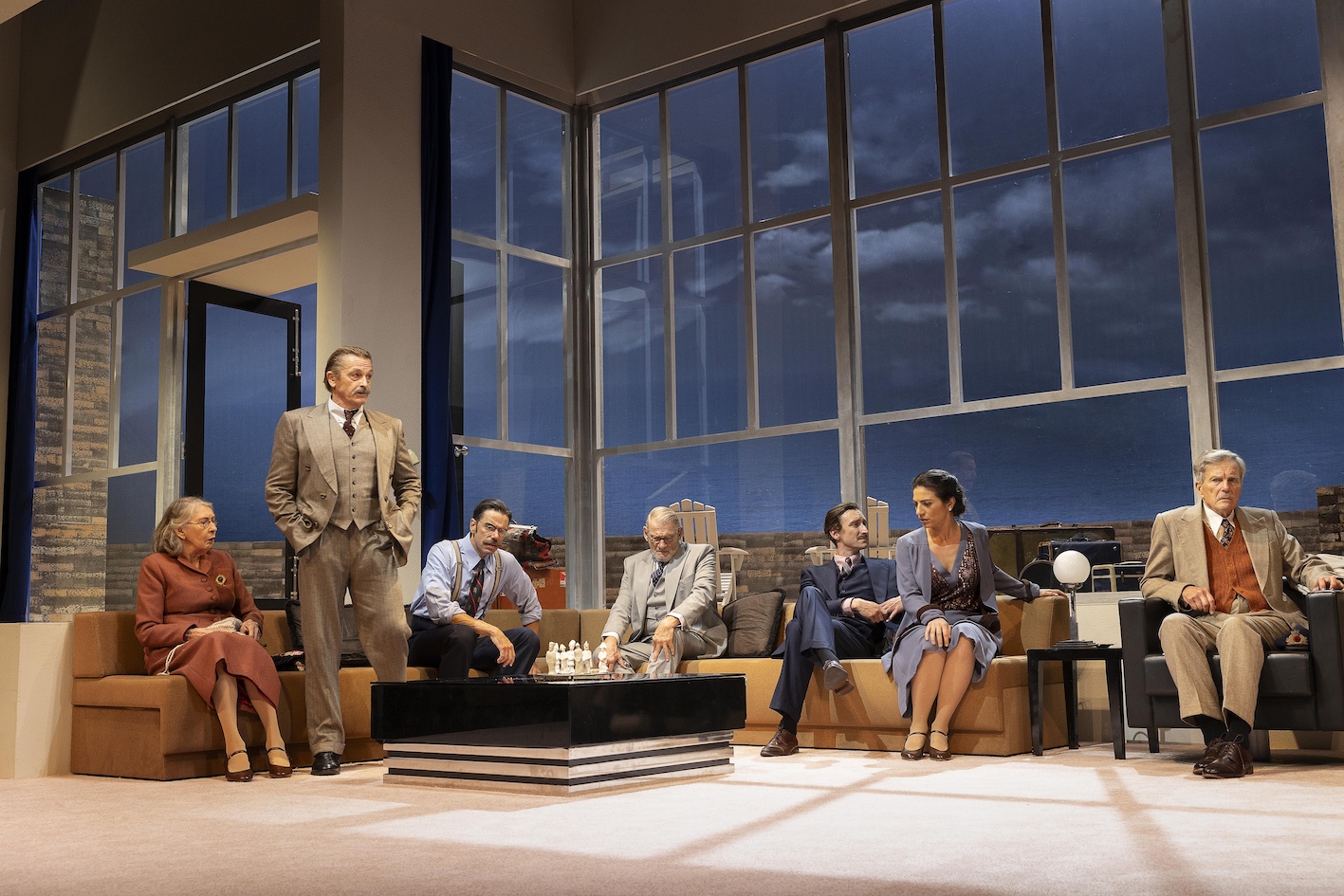
Designer Dale Ferguson bases the scenic design on Richard Neutra’s Lovell House, achieving a glorious clifftop feel along with lovely art deco touches.

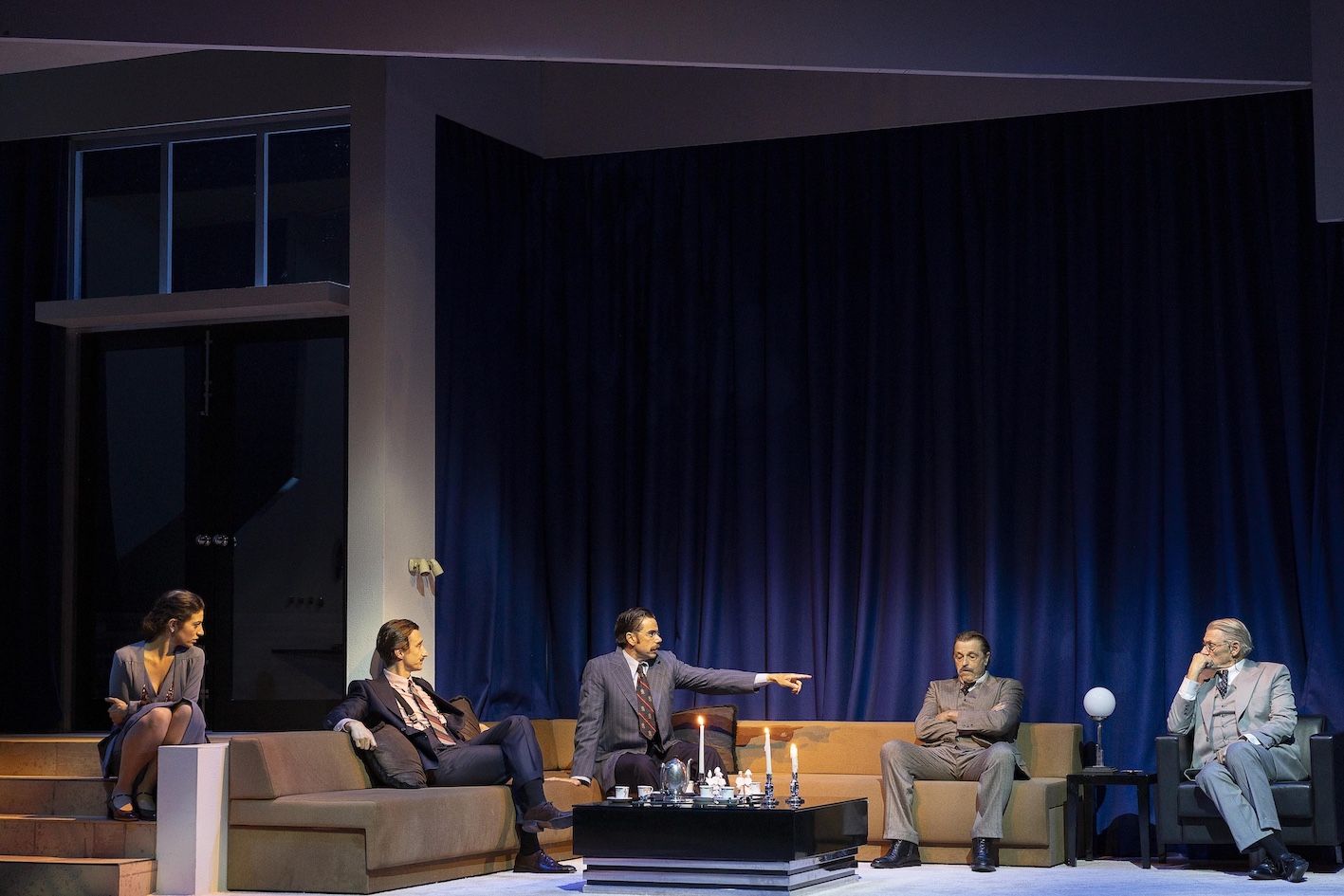
Lighting designer Trudy Dalgleish complements Ferguson’s design, providing the appearance of abundant sunlight flowing in through the large windows. Dalgleish later contributes to the suspenseful atmosphere, when electricity runs out and the guests huddle in flickering candlelight.
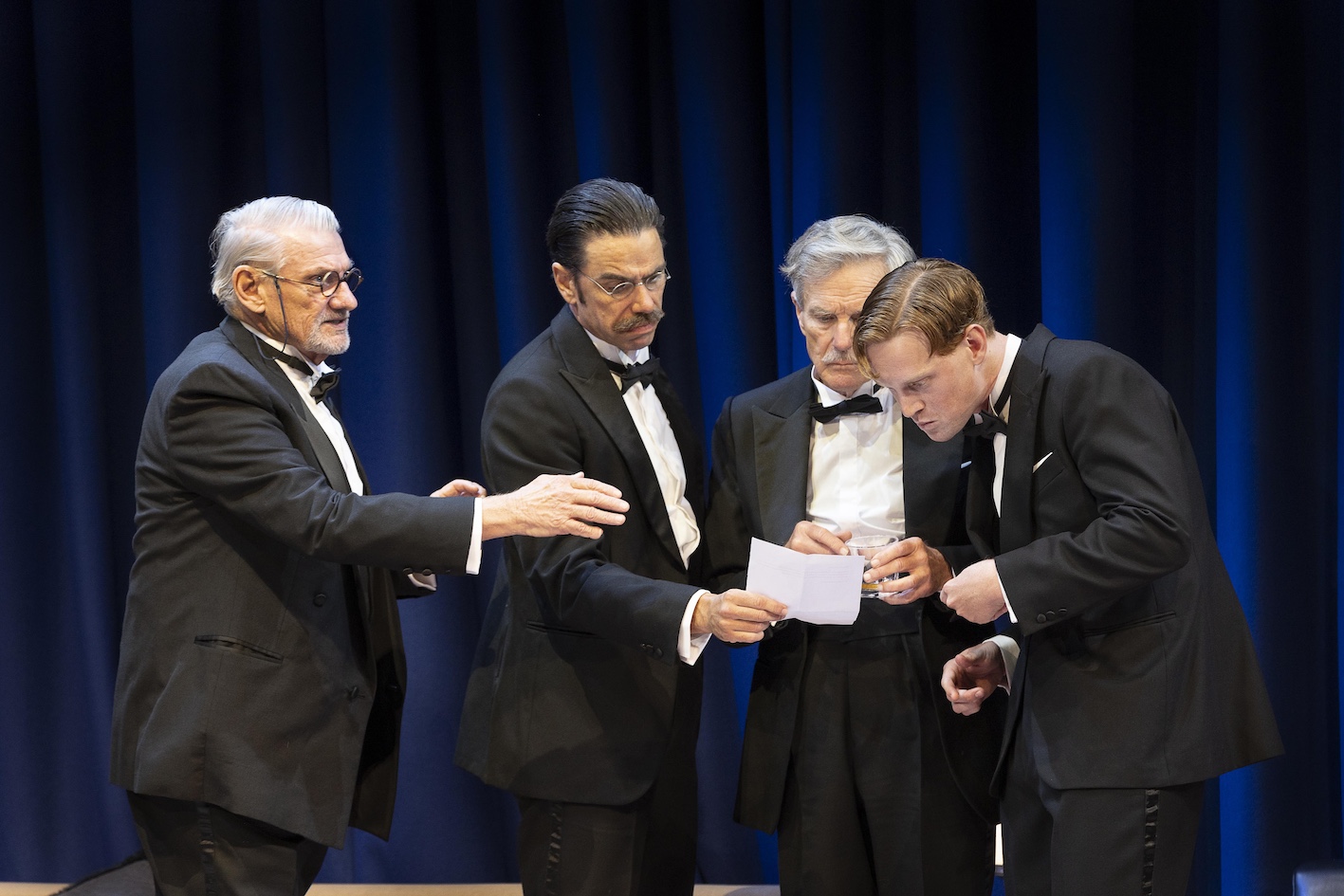
Ferguson’s costume design captures the full glamour of the period, with the elegant guests dressing formally for dinner and further art deco flourishes seen in the female costumes.
Sound designer Paul Charlier subtly enhances the suspense with musical stings accompanying the all too frequent murders.
Given that high profile stars might indicate which characters will last the longest in his story, the cast is presented as an ensemble. Playing one of only three female characters, Mia Morrissey (Vera Claythorne) is a standout in regard to both period style and engaging audience affection.
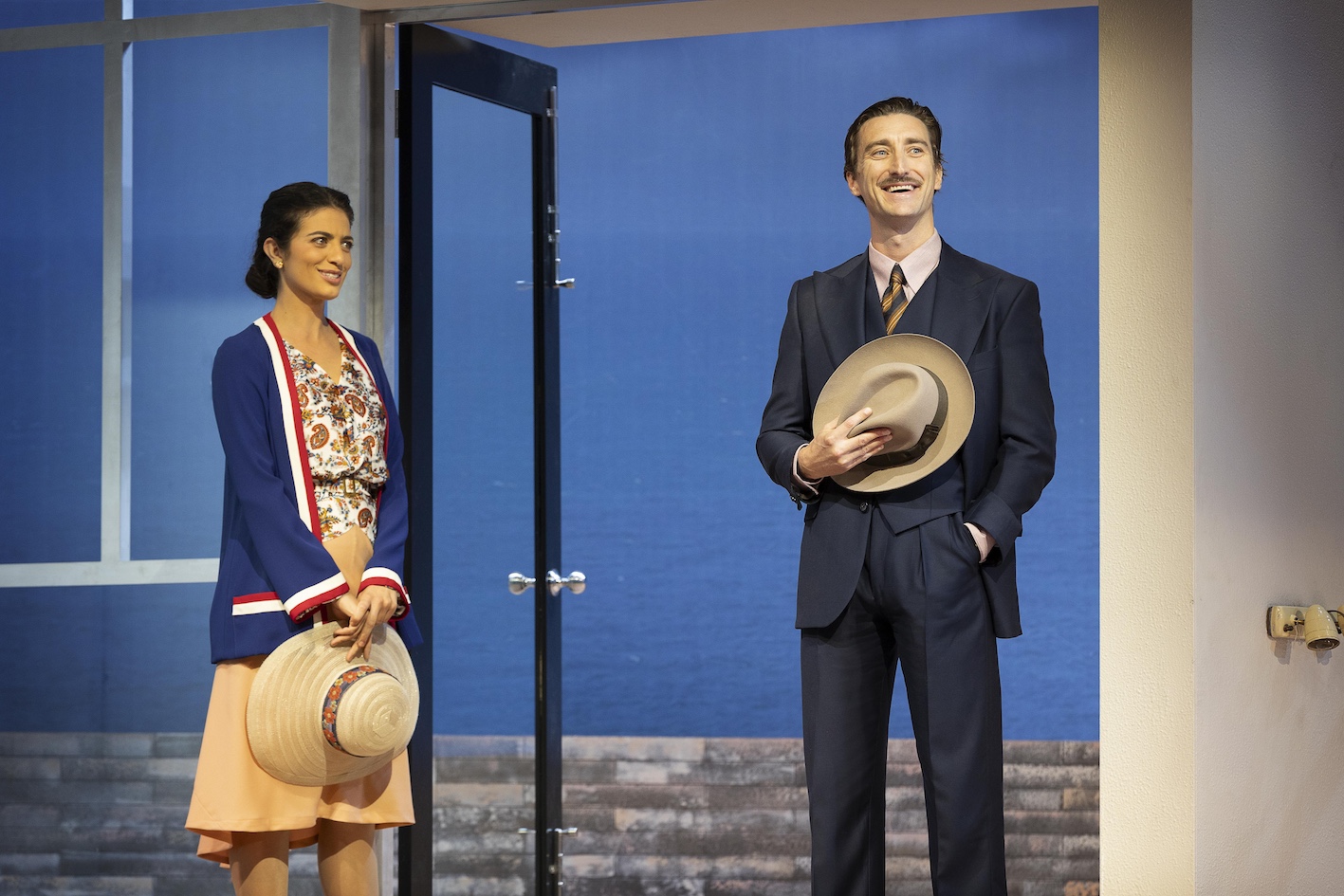
Gifted comic actors Grant Piro and Christen O’Leary are woefully underused as solemn servants Mr and Mrs Rogers. Peter O’Brien is a solid presence as the story’s detective of sorts, William Blore. Nicholas Hammond brings an air of class as doddery military man, General Mackenzie.
In a key role of retried judge Sir Lawrence Wargrave, who drives much of the early exposition, Anthony Phelan slows the action, appearing not fully prepared for the performance. It is trusted that Phelan’s work will sharpen as the play continues. Indeed, all dialogue will hopefully benefit from tighter cues and the development of a degree of chemistry as the season continues.
Sure to be of great interest to the Agatha Christie’s ever devoted legion of fans, classic thriller And Then There Were None is a welcome stage presentation in 2025.
And Then There Were None plays at Comedy Theatre, Melbourne until 23 March 2025. For tickets, click here.
And Then There Were None plays at Theatre Royal, Sydney from 3 May 2025. For tickets, click here.
And Then There Were None plays at His Majesty’s Theatre, Perth from 8 June 2025. For tickets, click here.
And Then There Were None plays at Her Majesty’s Theatre, Adelaide from 2 August 2025. For tickets, click here.
Photos: Jeff Busby
Categories: Reviews
 Man in Chair
1 reply »