
Blossoming from the fruitful collaboration between The Australian Ballet and Bangarra Dance Theatre, Flora makes its world premiere as a living work of art.
The first full-length work created by the two companies, Flora is a mighty achievement in regard to all aspects of creation and design. The completely cohesive work can be enjoyed for its sheer beauty, as well as discussed and appreciated for its levels of deeper meaning.
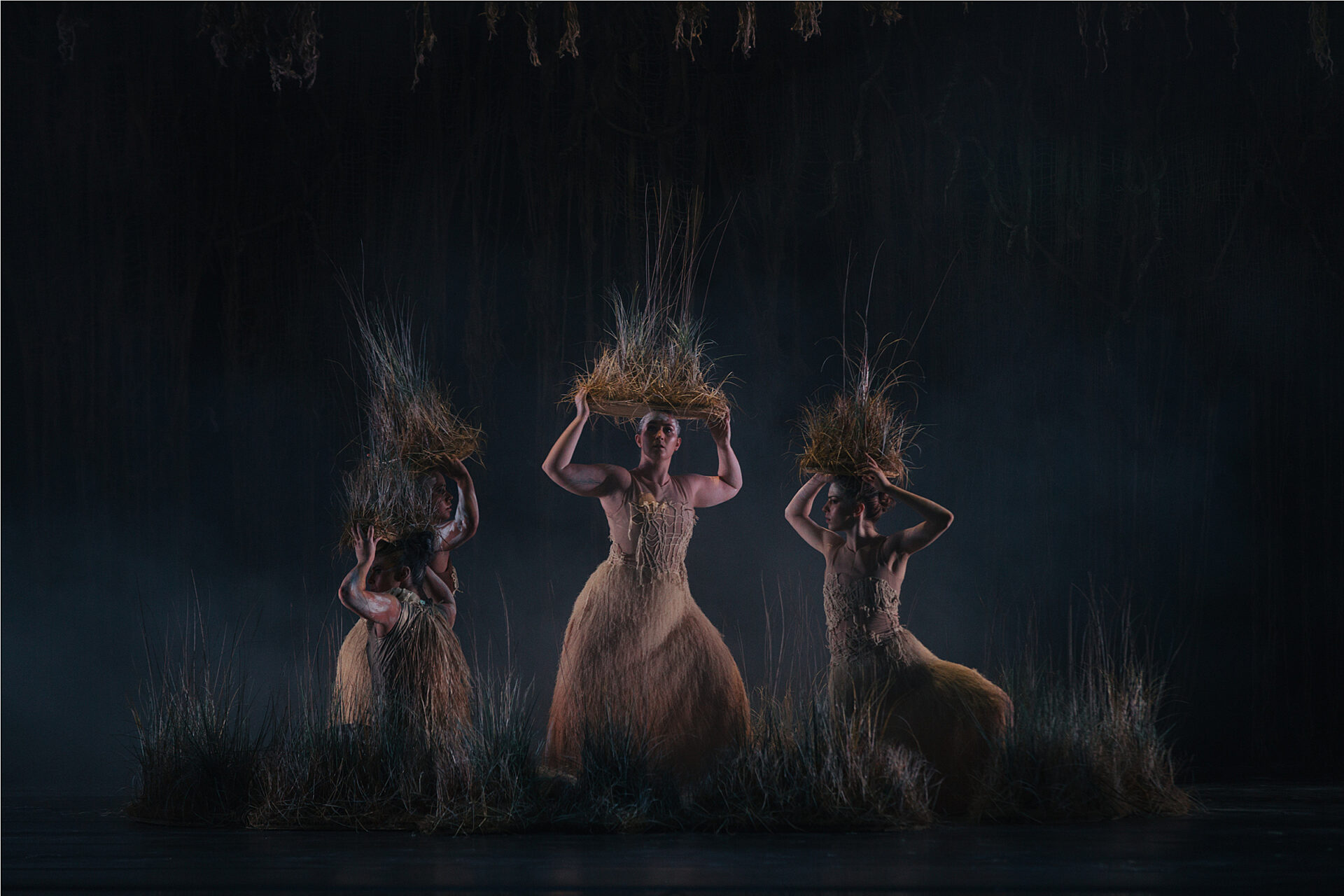
Composer William Barton and choreographer Frances Rings have crafted a free flowing series of 12 movements that follow a generally linear timeline of nature. Seeds lead to sleeping yams and then grasses, each aspect respected for its cultural meaning. As act one concludes, the natural flora of Australia is disturbed by colonisation, serving as a metaphor for the wider intrusion upon First Nations societies.
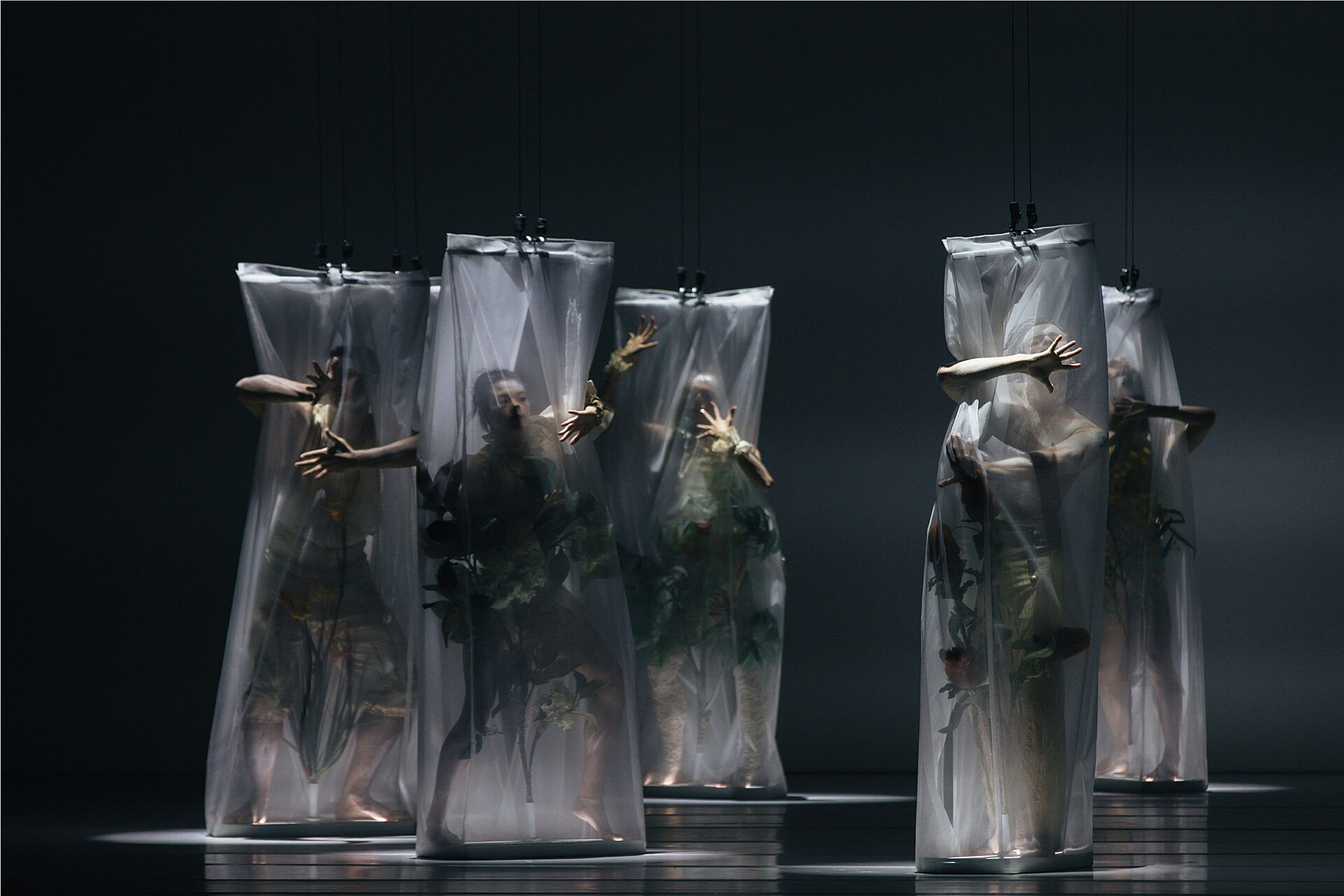
As act two begins, a collection of species removed by Sir Joseph Banks are joined in their display cases by twisted human forms in a clear personification of the unnatural placement of flora as museum artefacts.
In the most political sequence, the use of Golden Wattle in the national coat of arms (1912) is harshly contrasted with the fact that First Nations peoples were not counted in Commonwealth census until 1967. Moving forward, the work ends positively, with repatriation of species and a final celebration of the stunning beauty of bush flowers.
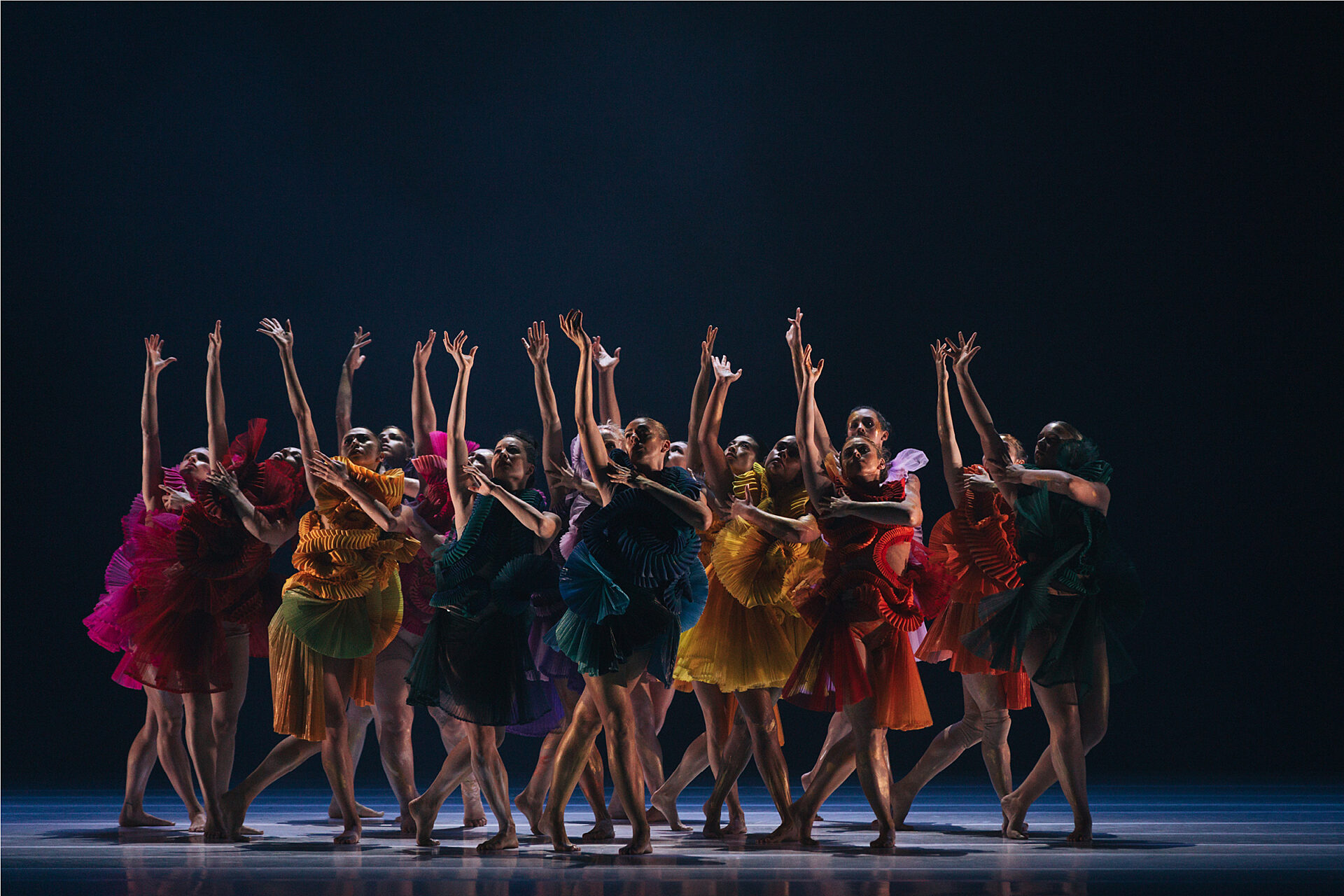
Rings’ modern choreography utilises expressive freestyle movement, commanding attention each time the dancers suddenly switch to tightly synchronised dance in crisp formations. Dancers from both companies are perfectly integrated, deftly working as one seamless ensemble.
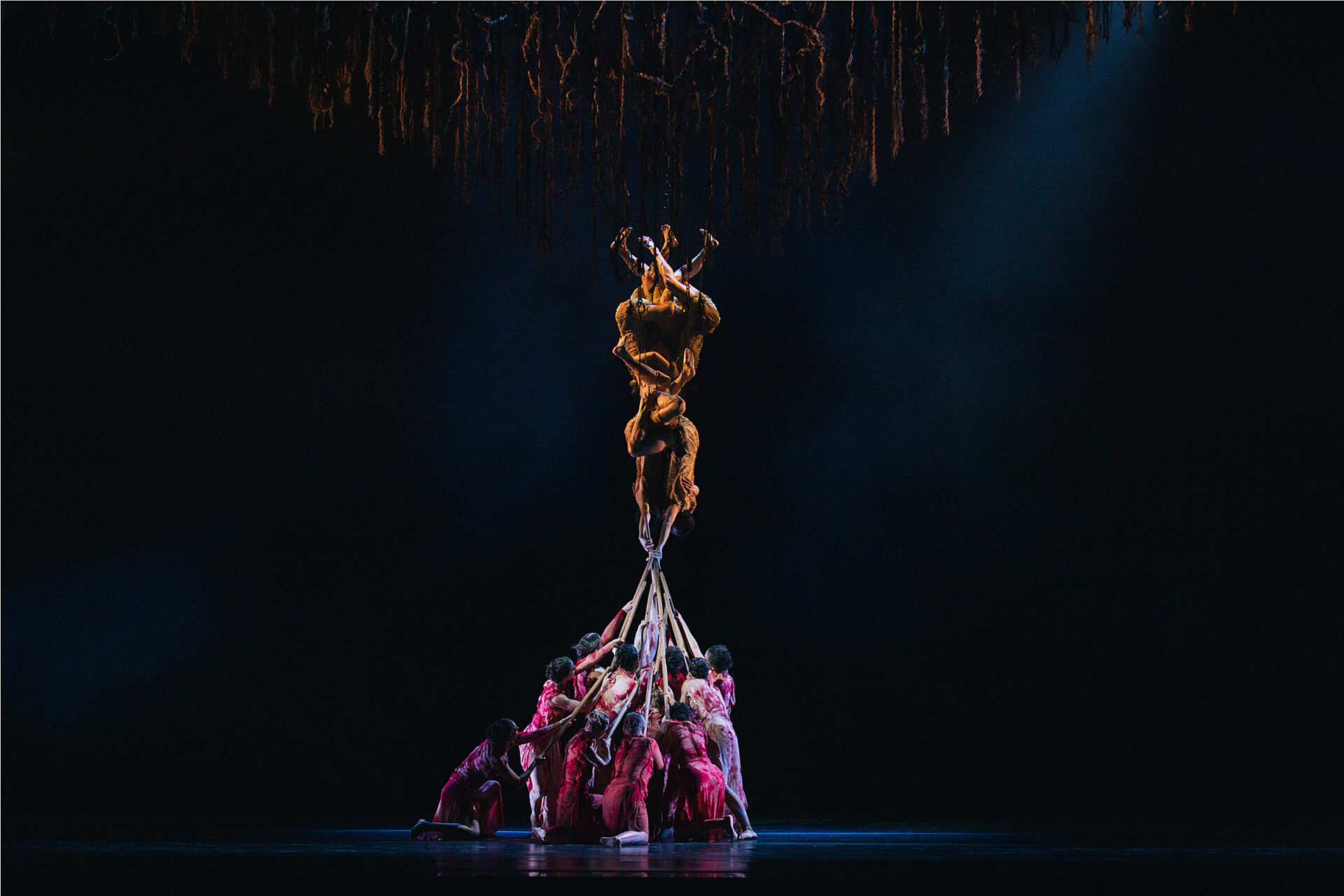
A particularly thrilling highlight of the dance staging comes early in the work. As part of the set design of Elizabeth Gadsby, a large bank of sleeping yams hangs overheard. Movement is seen and it is soon realised that there are dancers (gamely) hanging upside down amidst the yams. The dancers are gently lowered, artfully unfurling and connecting to show the miracle of plant life at work.
Barton’s score is a pleasure to hear at first listen. Orchestrated for a medium-sized orchestra, the music nonetheless has a lush quality and makes terrific use of varied percussion instruments. Maestro Jonathan Lo leads a reduced contingent of Orchestra Victoria, bringing the driving momentum of the score to vivid life. Given these highly valued musical resources, it is not clear why some parts of the score are played as recorded music with the orchestra just sitting there in the dark. That said, the transition from recorded to live music is incredibly subtle and smooth each time.
On an open black stage with very few scenic elements, the costume design of Grace Lillian Lee can be admired in all its stunning glory. Lee not only draws from a gorgeous palette of evocative colours, but also uses expertly chosen fabrics that play with the light and move beautifully with the dancers.
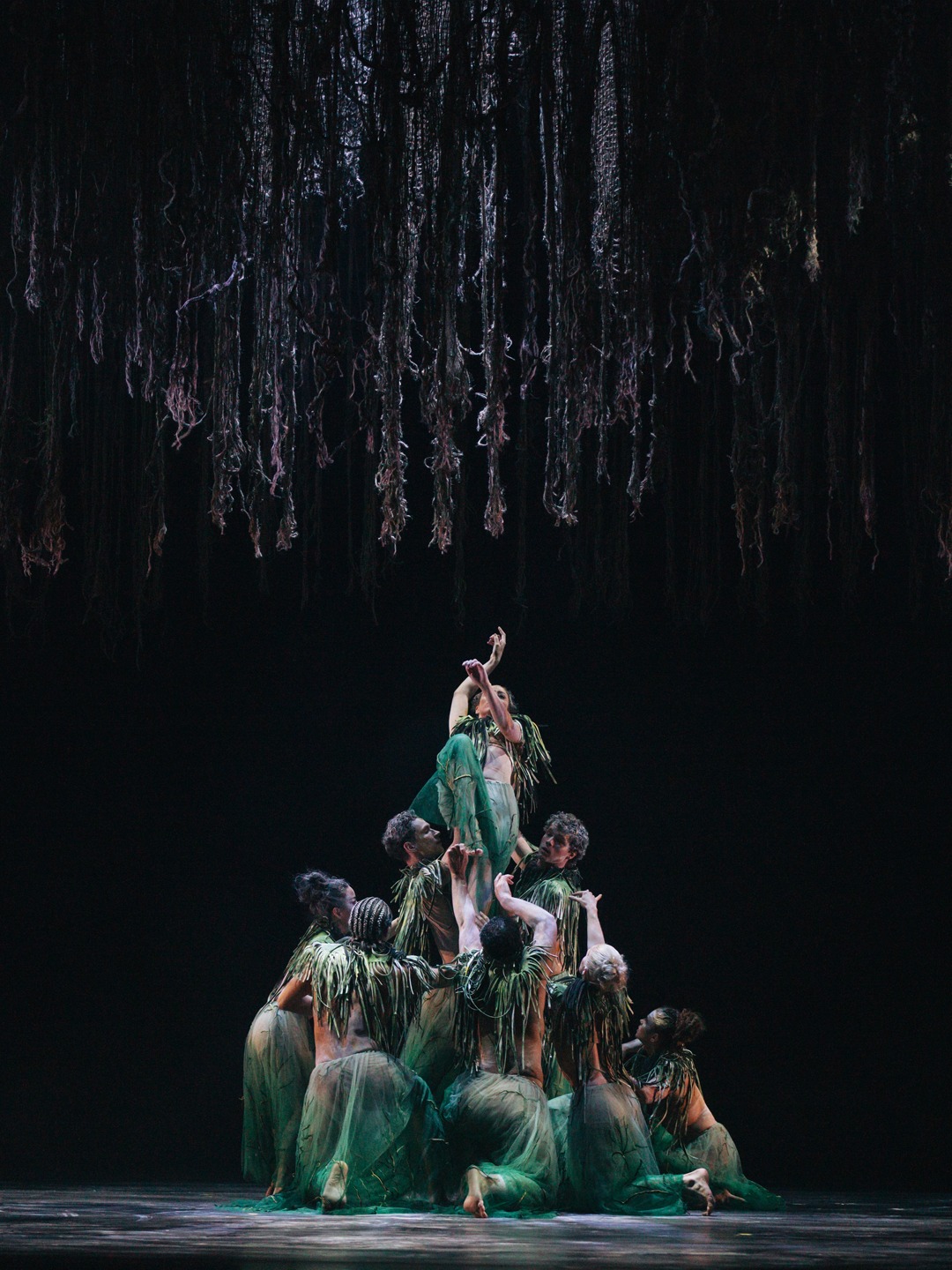
Lighting designer Karen Norris takes an artistic approach to illustrating the stage, using long wide shafts of light picked up by ever present haze. While the overall result is visually appealing, it is evident that Norris has not considered the full facial and physical expression of the dancers as worthy of being clearly seen by the audience.
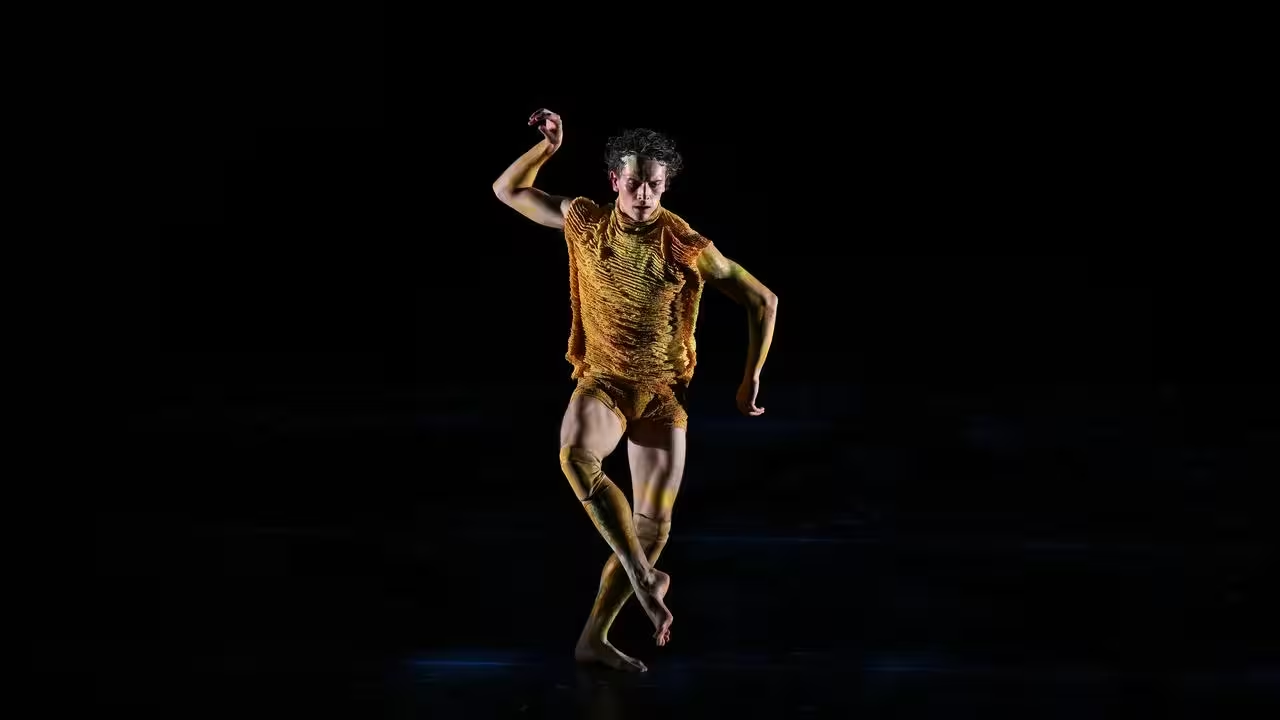
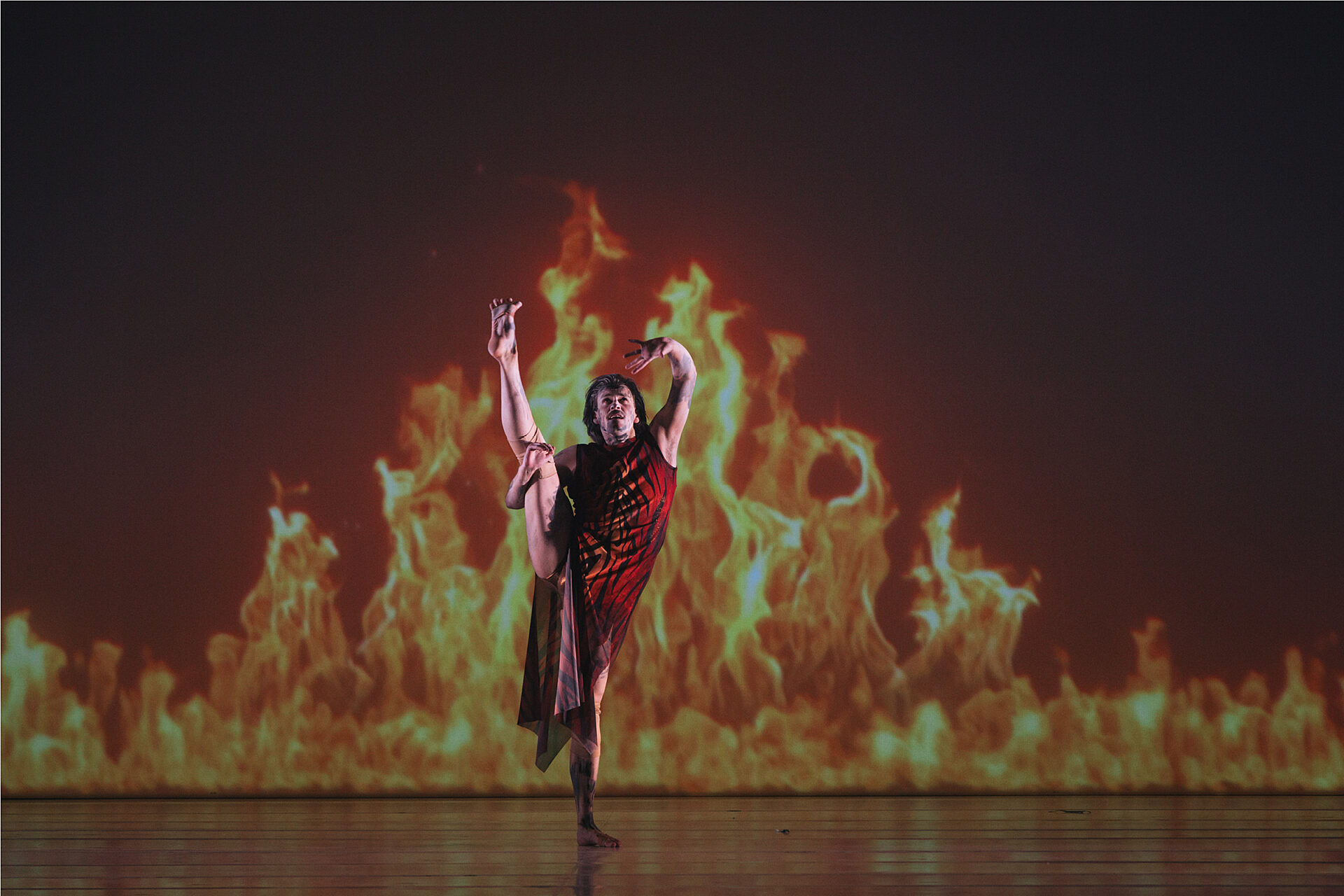
Notable solo pieces in Flora include a soulful, sinuous Yams Solo by Callum Linnane, the hardy Single Thread Solo by Kassidy Waters, and the heroic Knowledge Holder Solo of Kallum Goolagong. Elijah Trevitt makes a memorably dramatic impact as the Fire Spirit. Most striking is the work of Jill Ogai in the Golden Wattle Solo; dressed in black, Ogai palpably gives representation of the depth of unspeakable pain of an entire people ignored by the body governing the country where they live.
Unlike the usual rotation of casts, the season of Flora is performed by the one set of dancers at every performance. The dancers are actually listed on the cast sheet, along with the synopsis. It is strongly recommended to reserve time to read through this document before the performance so as to best appreciate the structure and meaning of the work.
Standing proudly apart from the usual roster of fairies and princes, Flora is a tremendous achievement, to be enthusiastically supported and celebrated.
Flora plays at Regent Theatre, Melbourne until 21 March 2026. For tickets, click here.
Flora plays at Joan Sutherland Theatre, Sydney Opera House until 7 – 18 April 2026. For tickets, click here.
Photos: Kate Longley
 Man in Chair