
The world premiere of Stella, a new Australian musical, tells the stirring and affecting life story of literary great Stella Miles Franklin with fitting confidence and winning style.
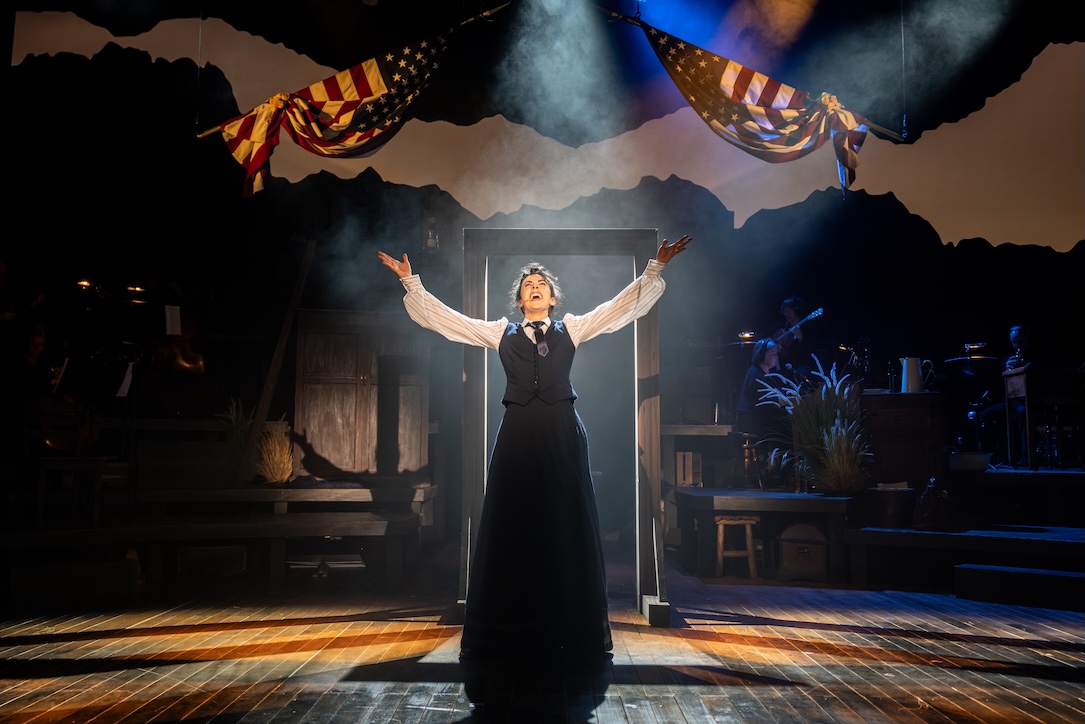
A work long in gestation, Stella happens to arrive shortly after 2025 hit musical My Brilliant Career. Stella gives audiences the welcome chance to learn about the woman behind the acclaimed Australian novel, which was written at the beginning of Franklin’s long and often challenging career.
Achieving the all too rare feat of writing book, music, and lyrics, Monique diMattina has crafted a wonderfully cohesive work. Song flows naturally from speech, with interspersed dialogue economically pushing storytelling ever forward.
Completely avoiding the inherent risk of “wikipedia dumps” that plague bio-musicals, diMattina shows a light hand with exposition, rightly trusting the intelligence of the audience to follow Stella in her life journey from rural Australia to America and Europe before later returning home.
DiMattina’s lyrical songs are a pleasure to hear, engaging and appealing at first listen. Musical styles reflect place, from laconic rural NSW to the snappy pace of big town Sydney to the dazzle of America and on to the mannered tone of London. A particular musical highlight is the early act two “radio show” sequence in which Stella lives in London, juggling her various work commitments with her writing.
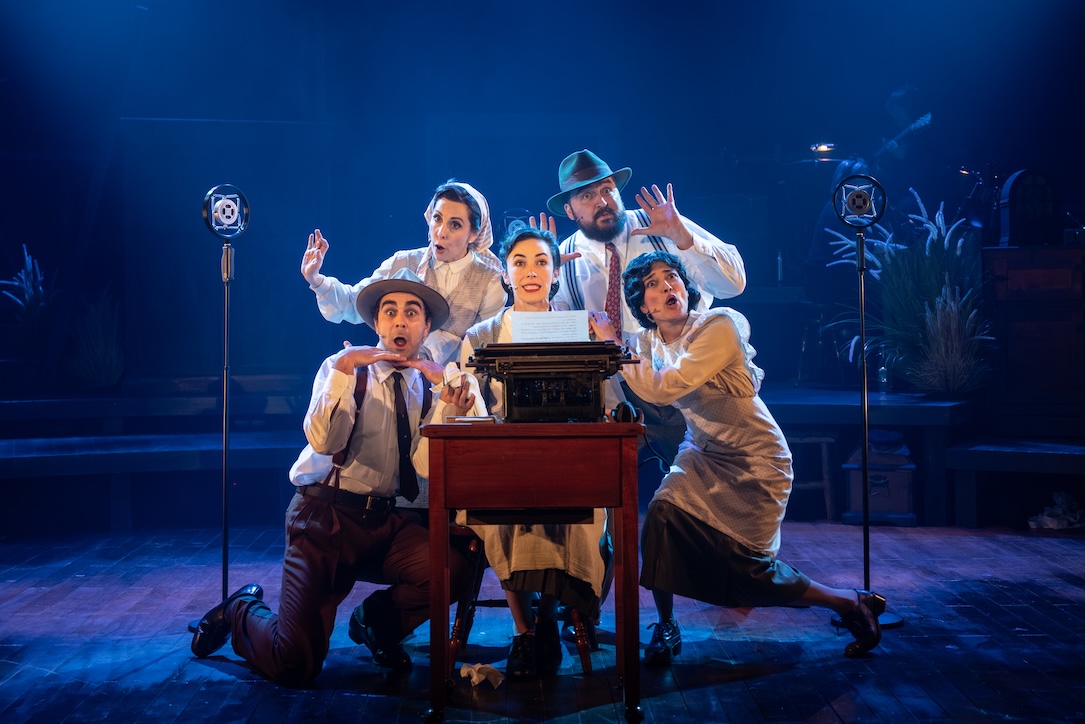
Benefitting mightily from the exacting preparation of musical director Vicky Jacobs, the world premiere score is played and sung with terrific flair. The music is heard at its best as played by Jacobs and six fellow musicians, positioned atmospherically on stage, and sung by the highly talented cast of five performers. A couple of a cappella sequences demonstrate the quality of the singers and their well polished harmonies.
Director Julia Robertson deftly supports diMattina’s writing style, crafting a fluid staging centred upon Geraldine Hakewill as Stella, with Johanna Allen, Kaya Byrne, Shubshri Kandiah, and Joe Kosky expertly juggling multiple roles. Performance styles are beautifully understated, inviting the audience to lean in to the action. While diMattina’s writing is light on laughs, welcome moments of humour land perfectly thanks to the well rounded performances.
Set designer Nick Fry presents a visually appealing, dramatically flexible set of stage platforms that house the musicians and allow a sense of movement and varied locations as Stella traverses through locales. A pair of jagged backdrops creates a silhouette of country mountains and stormy sky, evocatively lit by lighting designer Sidney Younger. Younger shows further artistry in depicting WWI with flashing lights beneath the platforms, later warmly representing post-war London with multiple sepia-toned lanterns hanging in front of a black backdrop.
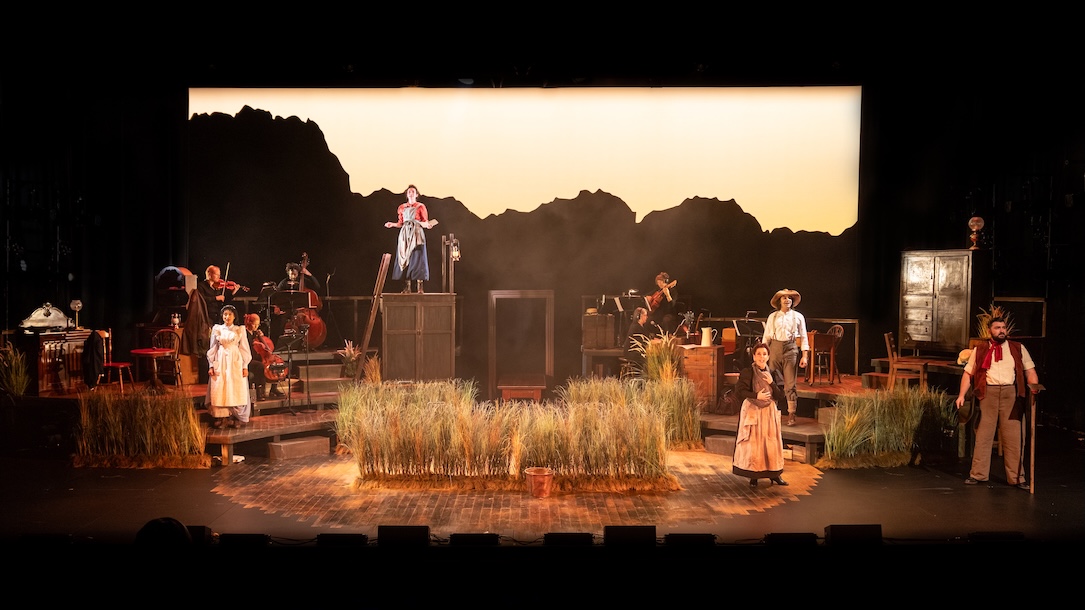
Costume designer Isla Shaw neatly supports the ongoing flow of supporting characters, allowing the four actors to conjure multiple roles with simple yet highly effective costume changes. The period looks are ably supported by the creative work of wig, hair, and make-up designer Shula Keyte.
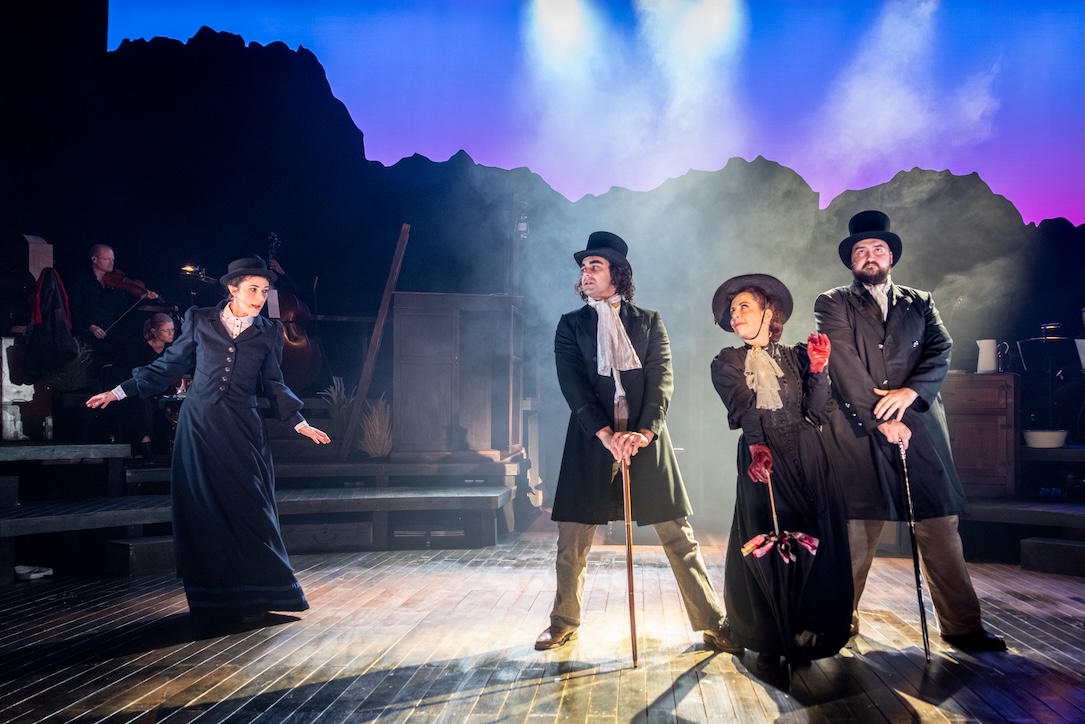
Sound Designer David Letch ensures that instrumental and vocal music are perfectly balanced, with diMattina’s intelligent lyrics heard crisply and clearly.
Presenting an authentic characterisation, Hakewill does not shy from the stubborn and frustrated aspects of Stella’s personality, providing no easy answers for the financial, familial, and professional struggles faced by the fiercely determined writer. Hakewill works smoothly with her fellow cast members to create a strong sense of unity. With the story covering many decades, Hakewill conveys Stella’s growth and burgeoning maturity with admirable subtlety.
Johanna Allen begins the musical as Stella’s domineering yet struggling Mother, a woman doing her best for her family in ongoing years of hardship. Allen has a wonderful showcase in act two with charm song “Bare It All,” which sees her beaming with exuberance as author Mary Gilmore before instantly flipping back to Mother in her dotage, gently crooning “No One Left To Bother Me.”
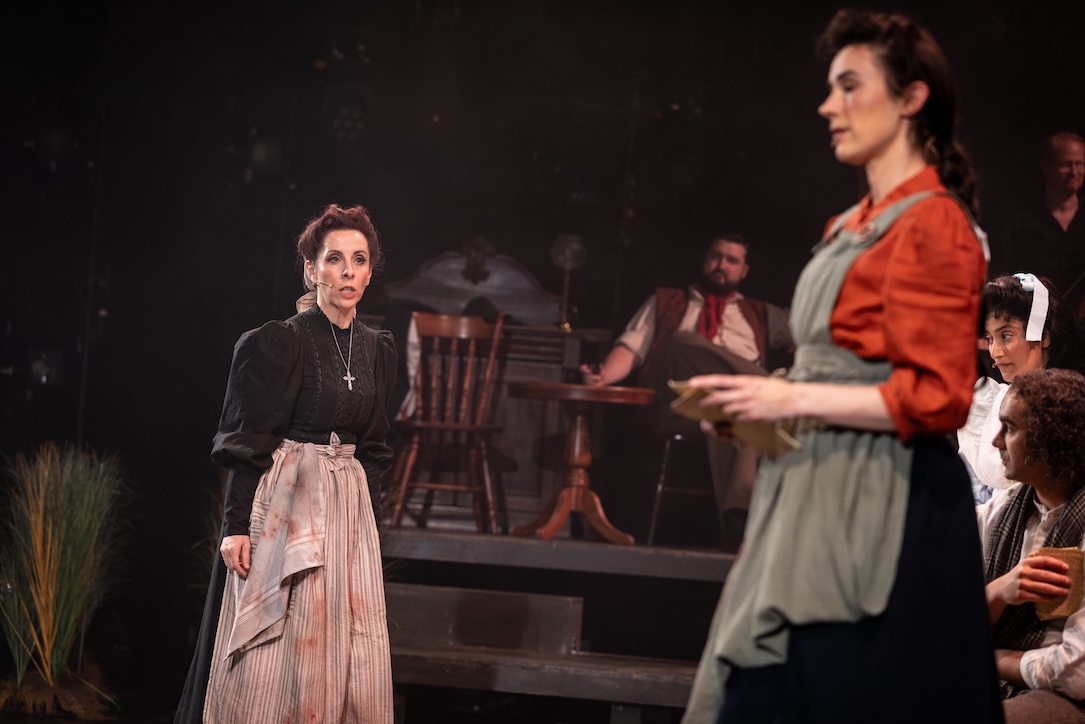
Joe Kosky deftly balances the weakness and warmth of Pa, a twinkle ever in his eye for his beloved daughter Stella. Kosky has fun with broad Australian accents, including significant literary figure Henry Lawson.
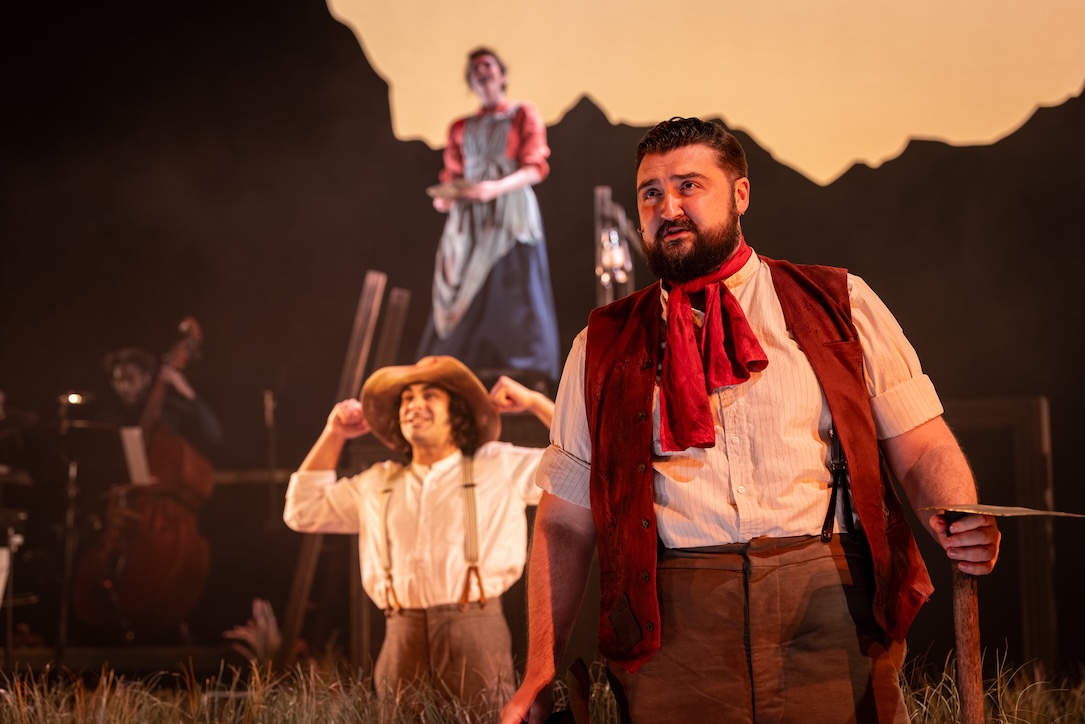
Possibly the strongest at landing a laugh, Kandiah brings wide-eyed warmth to Stella’s dear sister Linda, also playing suffragist Vida Goldstein and others.
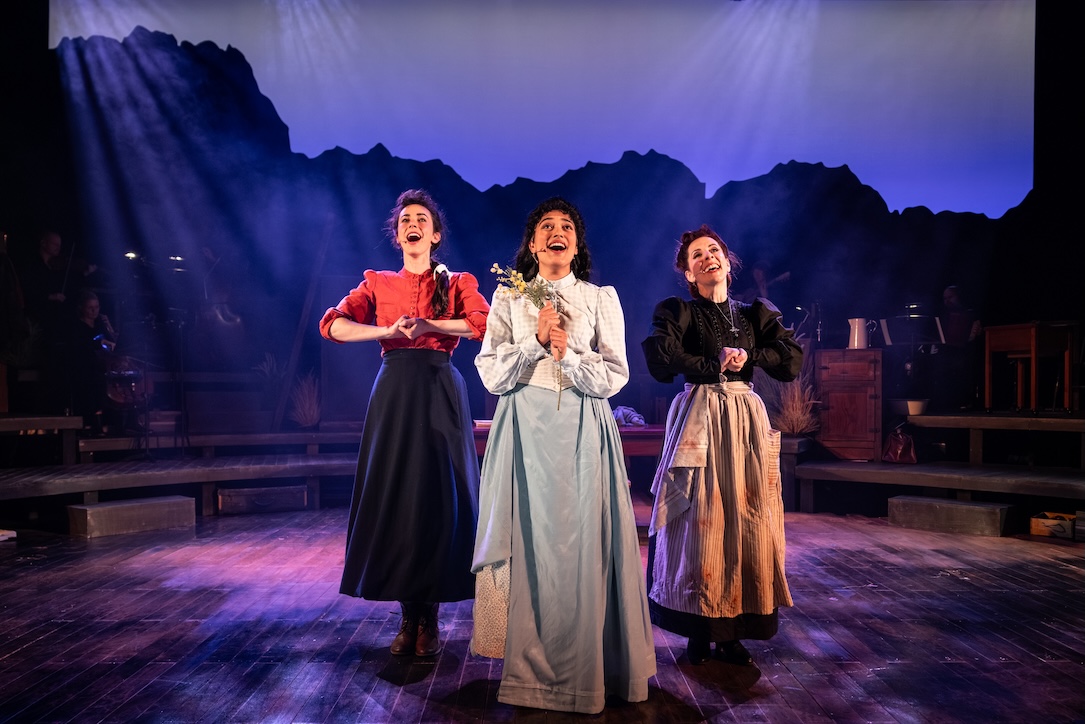
Kaya Byrne brings touching humanity to Norman, brother of Stella, achieving a strong contrast with his other roles, particularly that of Edwin.
While Stella concludes with a traditional 11 o’clock number, the moving ballad “Stella, It’s Miles,” the ultimate finale is the extraordinary “Roll Call” of Australian authors and their novels that have won the annual Miles Franklin Literary Award. Despite struggling financially through her life, Stella put aside money for her estate to establish the award. From Patrick White and Thomas Keneally to Tim Winton and Michelle de Kretser, the list of winners vividly demonstrates the extraordinary value this generously conceived prize has brought to Australian literature.
A work of inherent national interest and abundant quality, it is strongly hoped that Stella will enjoy a wider life beyond this initial world premiere season.
Stella plays at Alexander Theatre, Monash University, Melbourne until 20 June 2026. For tickets, click here.
Photos: Ben Fon
Categories: Music Theatre, Reviews

