
Opera Australia honours Melbourne with the premiere season of their glossy new production of the world’s favourite opera, La Bohème.
Finally retiring the celebrated Gale Edwards’ “Weimar Republic” production of La Bohème (programmed and enjoyed in 13 seasons since 2011), Opera Australia commissions a new production from the next generation of creative talent.
Director Constantine Costi leads a terrific team to bring his imaginative vision to life. Set in the early 1900s, this La Bohème plays out in a fantastical Parisian world as visualised by the artistic dreamers and poets that make up the characters.
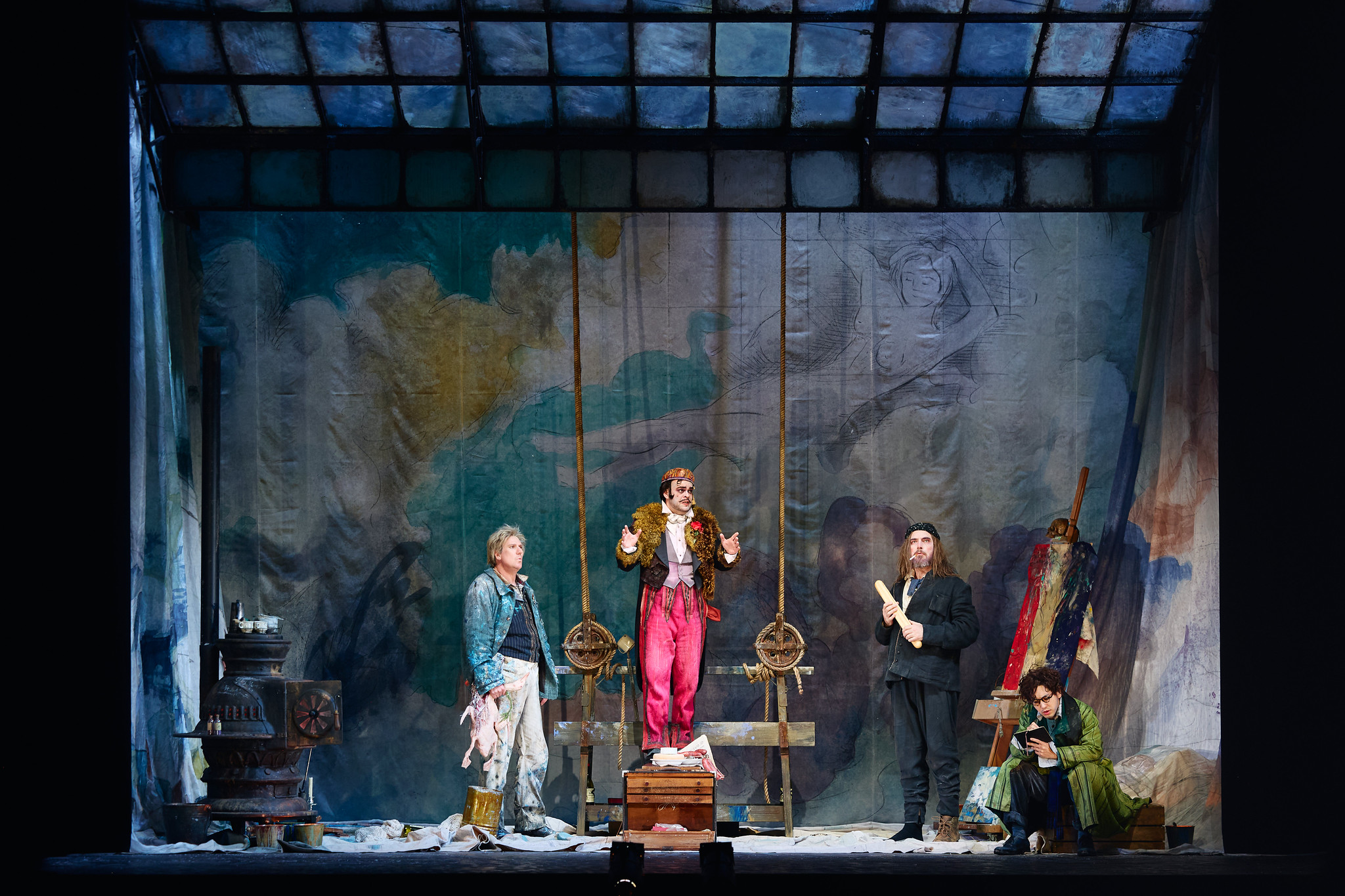
Costi opens the iris on a compact loft where Marcello has a basket rigged up to help paint his mural. Sabrina Myers’ highly theatrical costumes make an instant splash, with Rodolfo in teal and Schaunard arriving in ostentatious pink trousers. Landlord Bemoit is larger than life, his fake wooden leg amusingly exposed along with his predilection for women other than his wife.
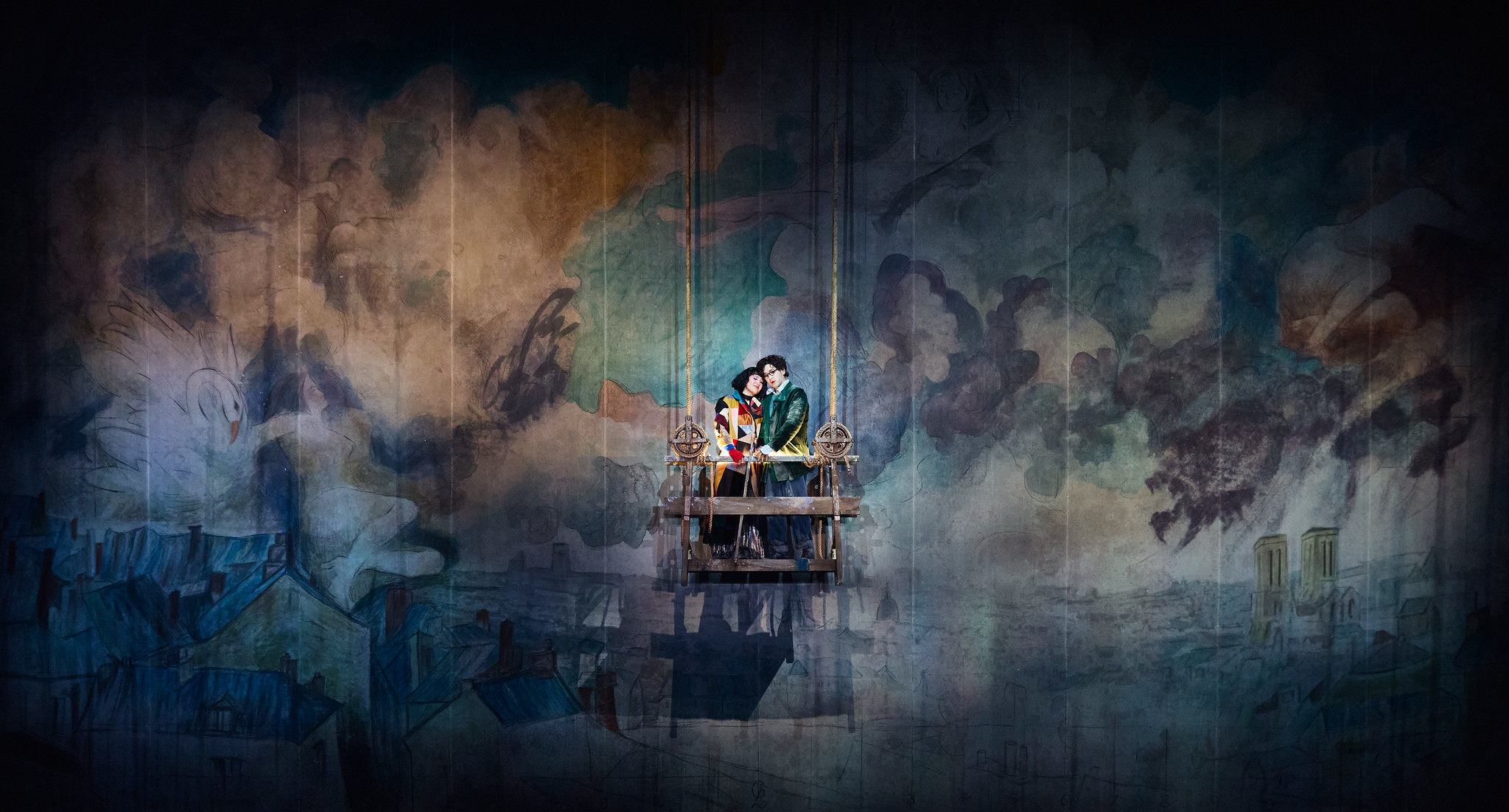
Modest seamstress Mimì and insecure playwright Rodolfo begin their tentative yet swiftly burgeoning romance as usual with their twin arias but then Costi pulls out all the stops for sumptuous duet “O soave fanciulla.” In a neat coup de théatre, Mimì and Rodolfo step into the basket and soar overhead as the set dissolves into a full backdrop of the Paris skyline.
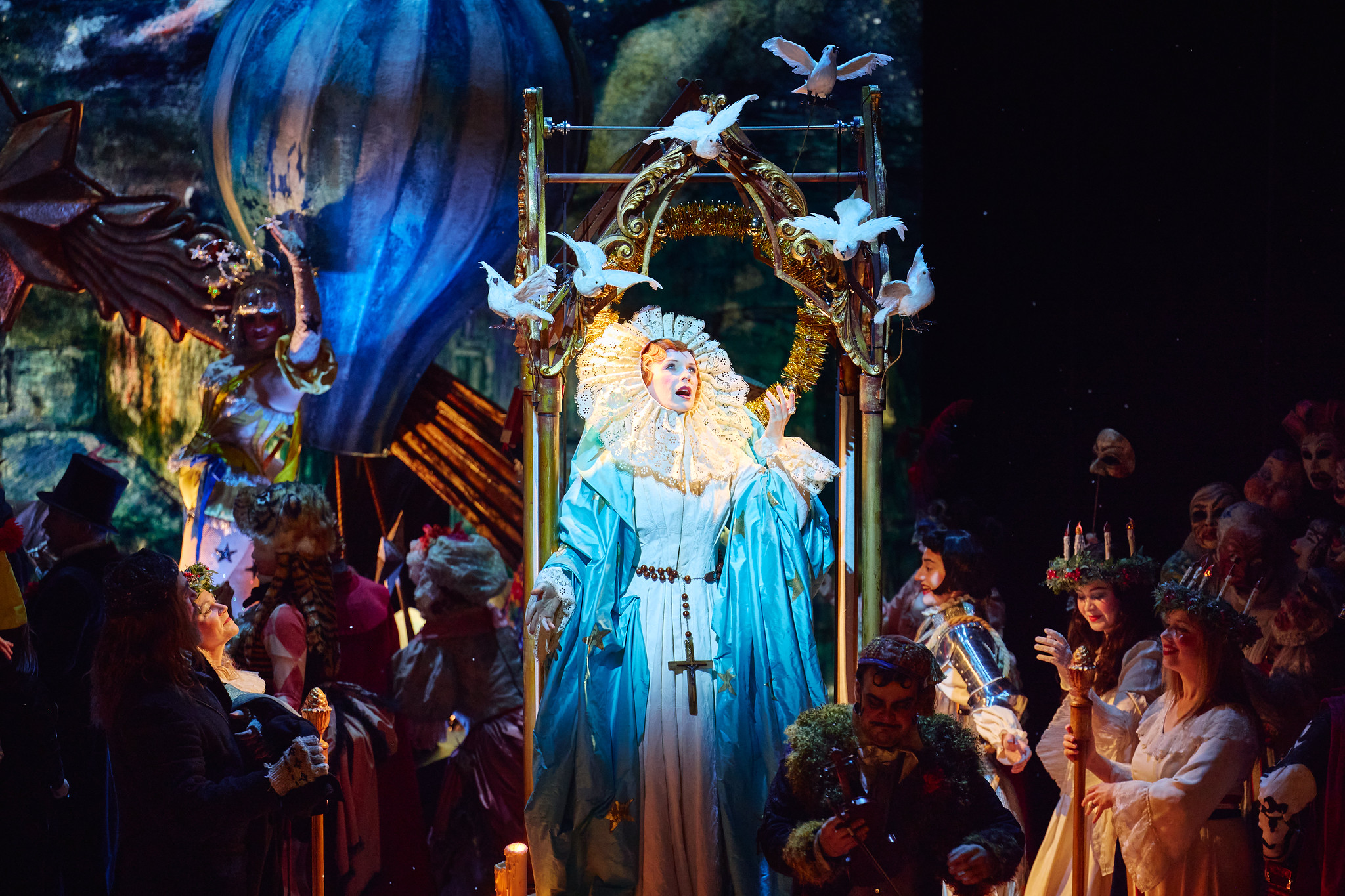
In a thrilling transition to the second act, lighting reveals the full streetscape behind the backcloth, with crowds of Parisians enjoying a lavish Christmas street parade. Mimì and Rodolfo eventually return to earth, with Musetta later arriving by float, amusingly made up as the virgin Mary, replete with bright red hair styled in a crisp marcel wave.
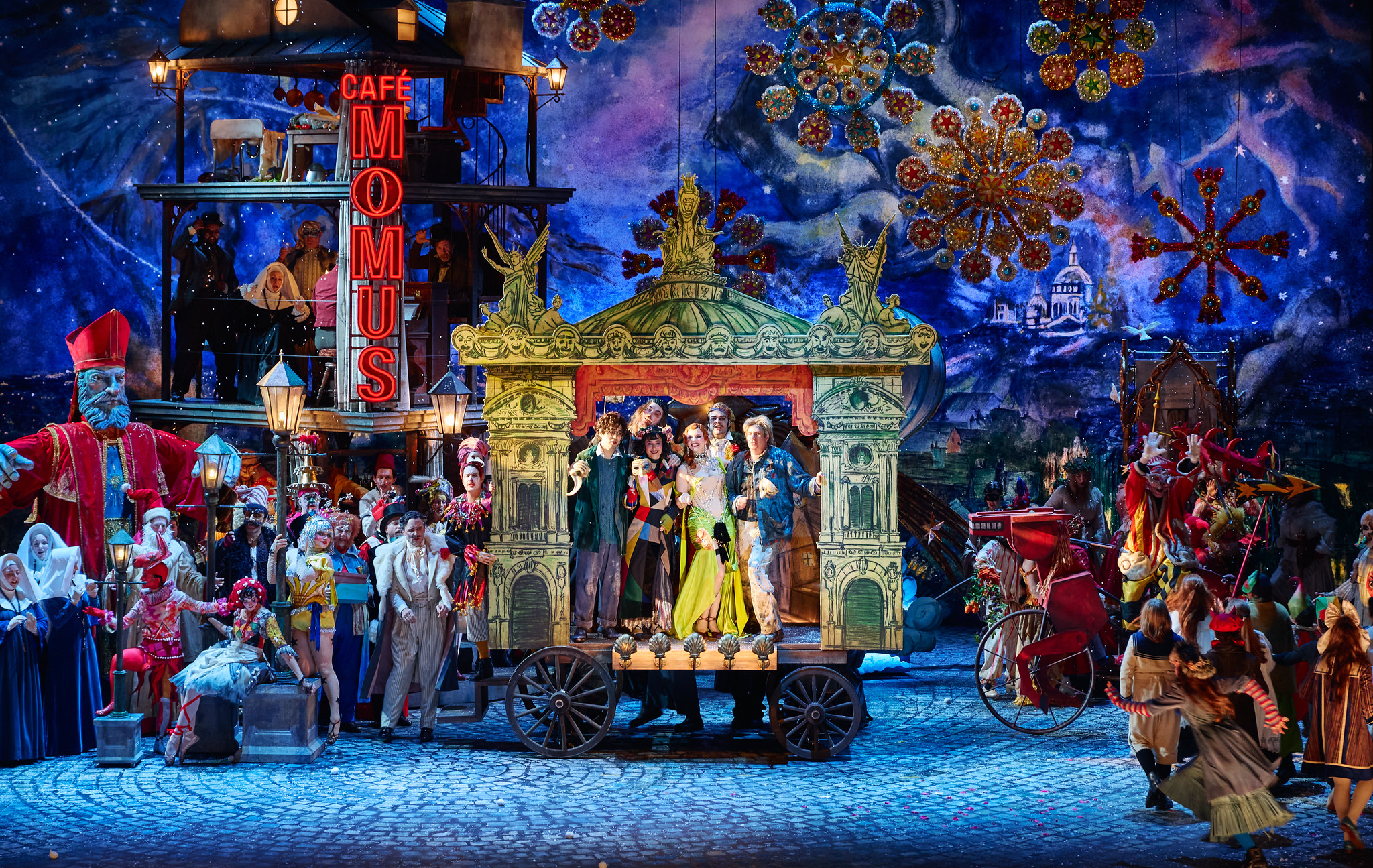
The spectacle continues as Musetta sings “Quando me’n vo’” from the first floor of the revolving Café Momus. Later, to hide from Musetta’s wealthy patron Alcindoro, the friends hide on a float resembling the Palais Garnier, quickly donning masks to avoid discovery. The final tableau of act two is quite unforgettable, with giant snowflakes adding to the gorgeous wintry Christmas scene.
Clearly, the majority of the budget has been expended on act two, with acts three and four far simpler in style. Costi’s insightful and effective direction keeps the focus on emotion in these acts, building to a moving climax.
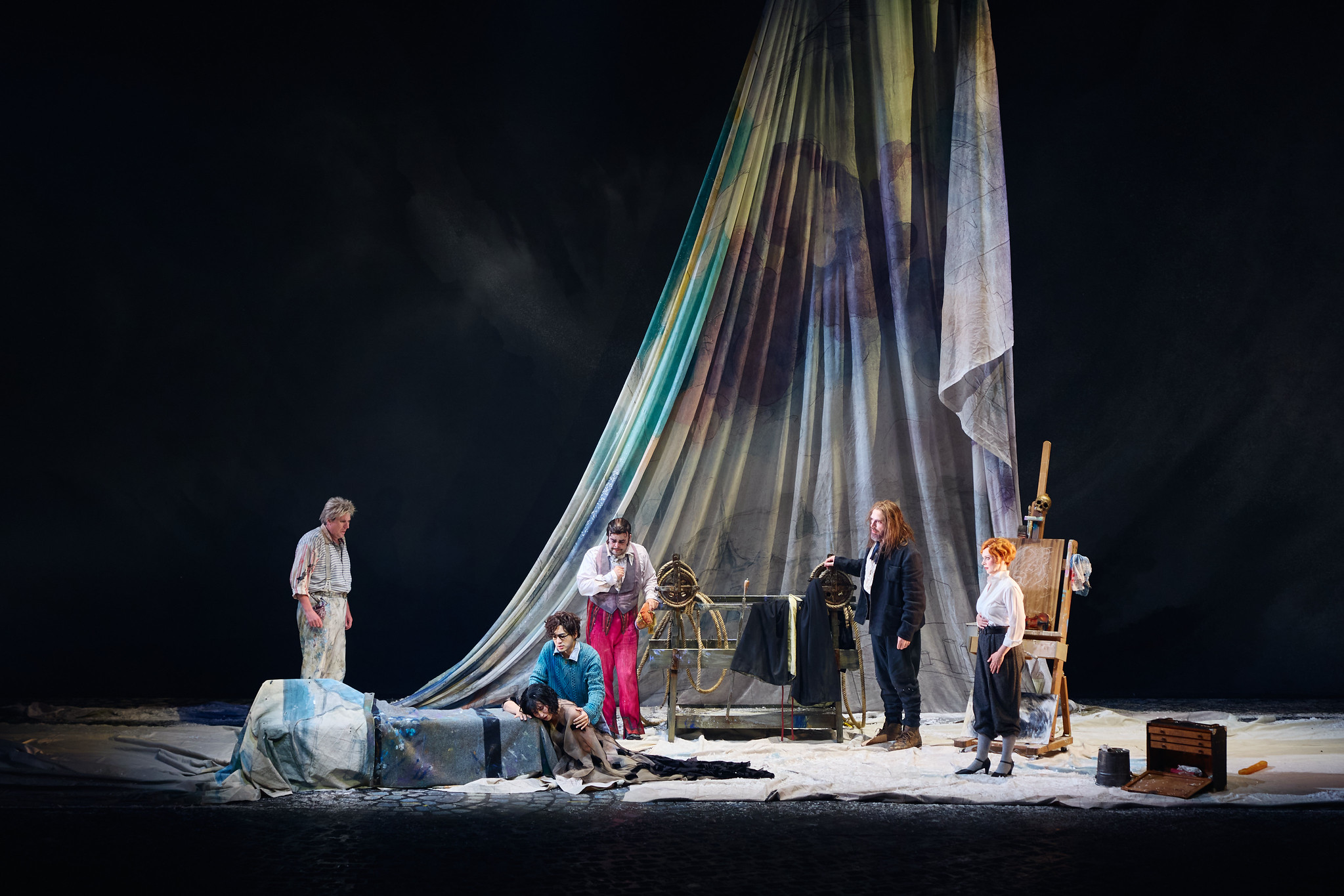
Myers’ colourful costumes are perfectly completed by the scenic design of Dann Barber, particularly the elaborate settings of act two. The lighting design of Morgan Moroney often adds atmosphere and yet some sequences are dimly under-lit. In the complex action of act two, Moroney provides no help to draw the eye of the audience to relevant characters.
British conductor Finnegan Downie Dear expertly leads Orchestra Victoria in a notably lush performance of Puccini’s much loved score. Dear brings out the full expressive colour of the score, judiciously keeping volume relatively low so as to not overpower the singers. Full credit to Anthony Hunt for exacting preparation of the Opera Australia Chorus, especially the wonderfully confident Children’s Chorus.
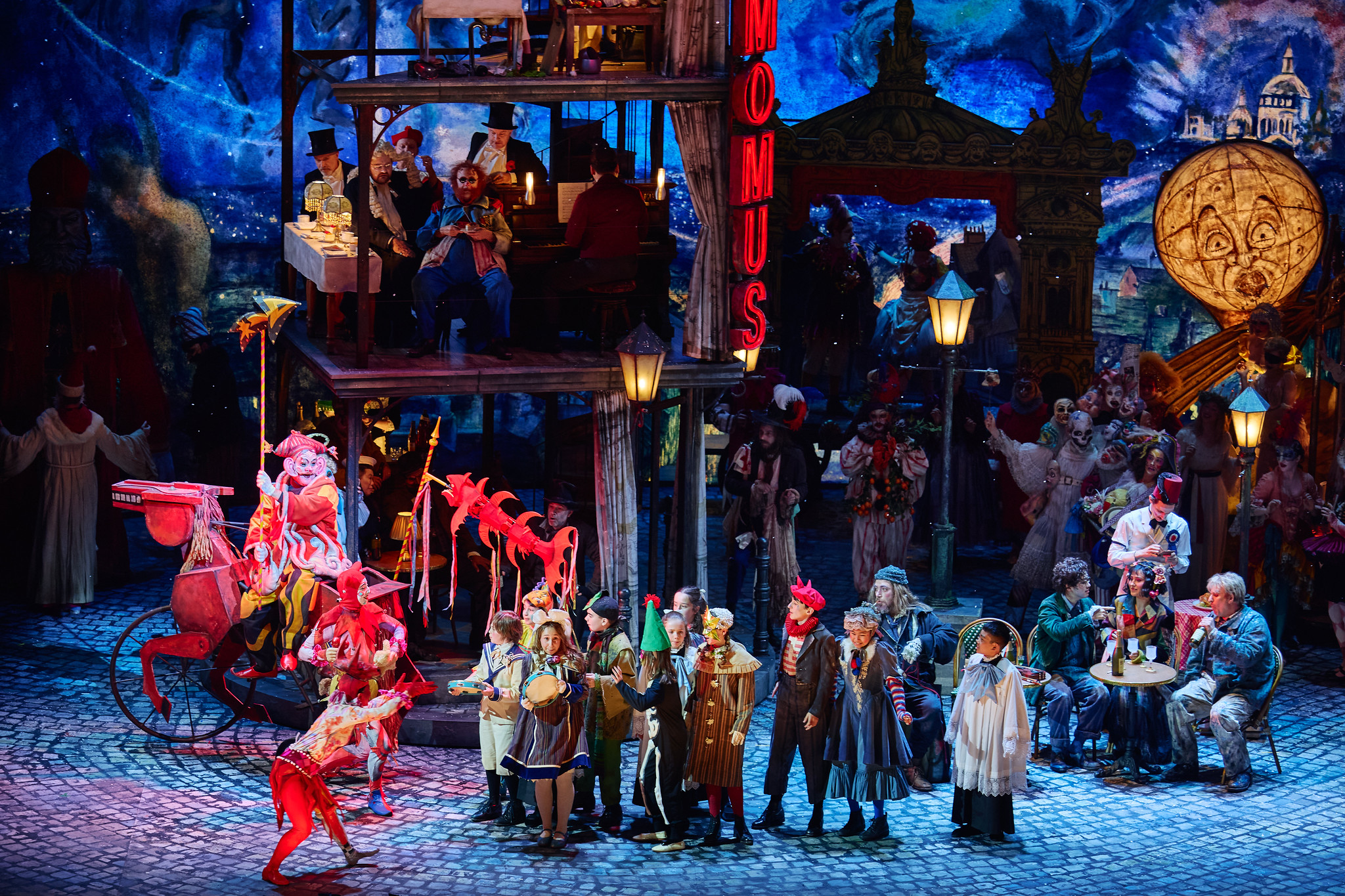
The idea to cast performers whose age and appearance correspond to the characters dates back at least to the iconic Baz Luhrmann La Bohème (1990) and the concept is used to great effect here. Costi has assembled a cast of youthful Bohemians whose passion, recklessness, and vulnerability convey the moving story with abundant realism.
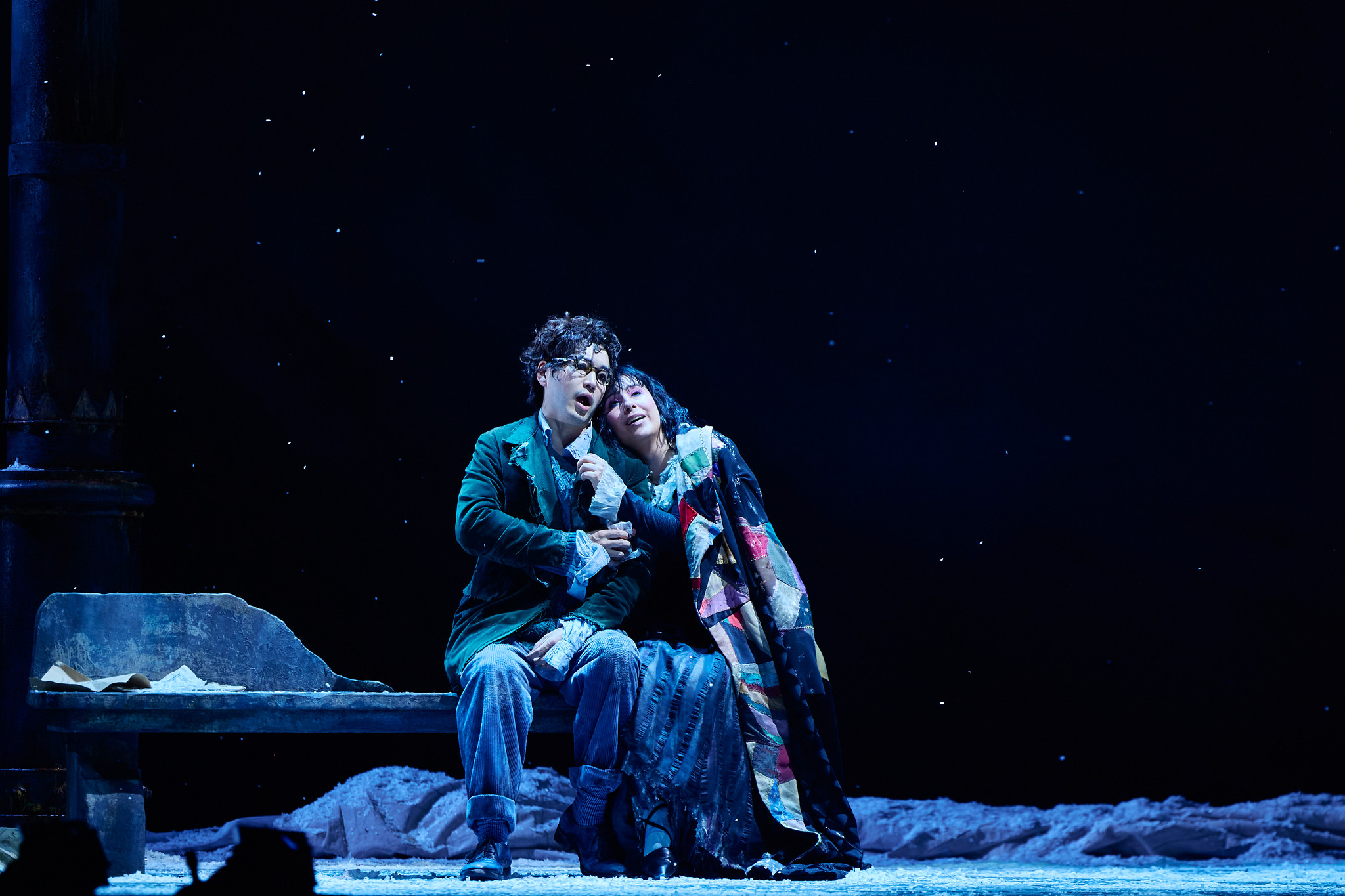
The performance of Russian soprano Galina Cheplakova as Mimì is an absolute highlight, her exquisite silvery vocals a pleasure to hear and encapsulating every ounce of emotion experienced by the ill-fated heroine.
Australian-Chinese tenor Kang Wang comes into his own in act three as Rodolfo blazes with jealousy and then sorrow. In acts one and two, Wang had underplayed the role, singing with insufficient power to carry through the theatre. Wang and Cheplakova enjoy strong chemistry and are satisfyingly believable as a couple.
Alexandra Flood delights as the decadent Musetta, delivering luscious vocals and affecting acting when Musetta thinks selflessly for the ailing Mimì. As the painter Marcello, stalwart company member Luke Gabbedy sets off sparks with Flood, also proving a strong scene partner for Wang.
In a brilliant display of the powers of understudies, Shane Lowrencev saves the day, stepping in as Schaunard with a performance so relaxed, detailed, and smoothly integrated that the majority of the audience would have had no idea he was a cover (had they not listened carefully to the pre-curtain announcement).
Having also played Colline in the 2011 premiere of the previous production of La Bohème, bass David Parkin returns to the role, bringing merry flair, and, in the final act, touching sensitivity.
Every opera lover of Melbourne has surely seen plenty of stagings of La Bohème. Perfectly timed for the lead up to Christmas, this new production has plenty to offer, most especially the extraordinary spectacle of act two.
La Bohème plays at Regent Theatre, Melbourne until 18 November 2026. For tickets, click here.
La Bohème plays at Joan Sutherland Theatre, Sydney Opera House, 31 December 2026 – 17 March 2027. For tickets, click here.
Photos: Peter Foster

