
Timeless and true, Fiddler on the Roof remains one the world’s most beloved musicals and this deliberately pared back staging allows the musical itself to truly shine.
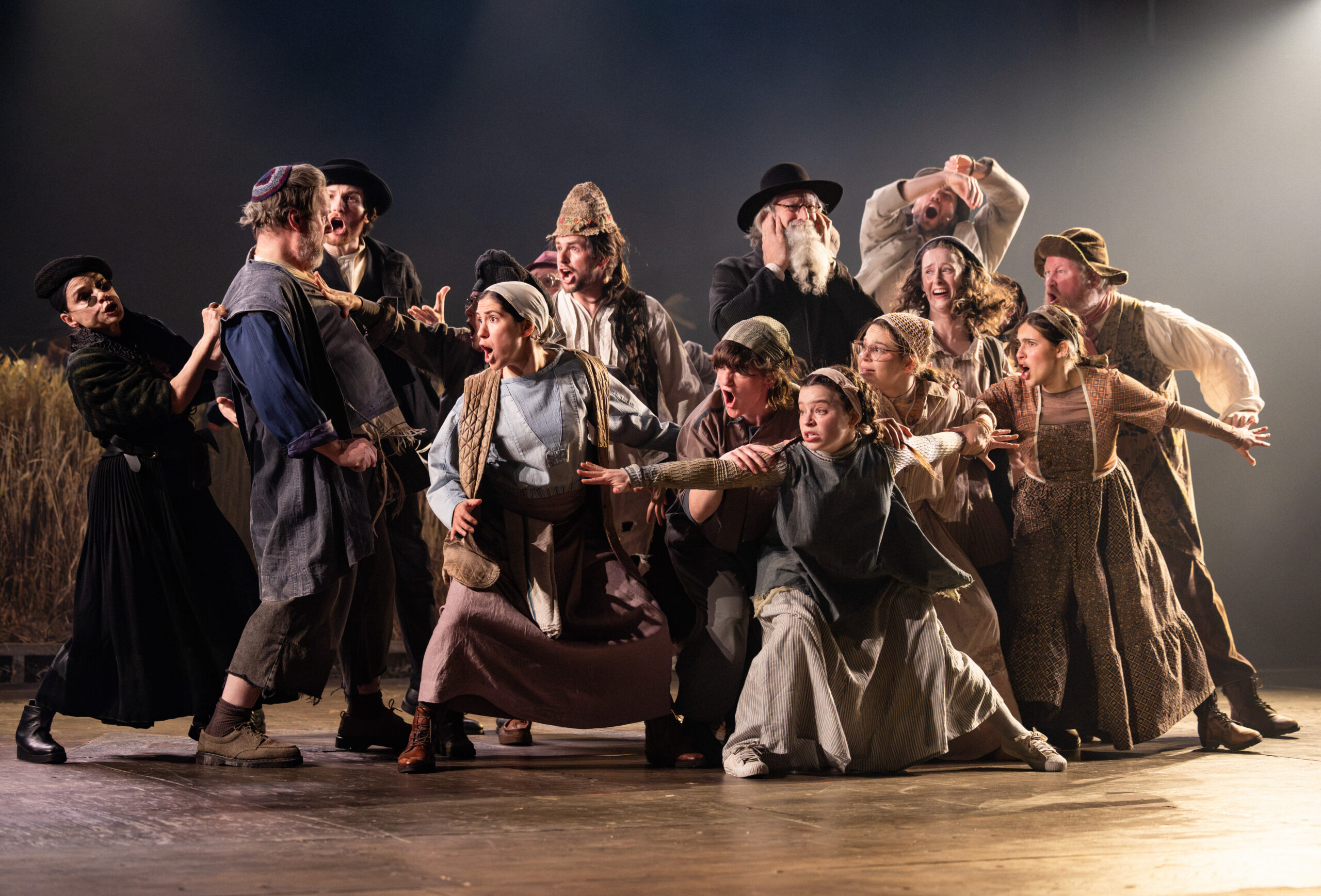
Opening at the crest of the Golden Age, 1964 Broadway musical Fiddler on the Roof won nine Tony Awards (including Best Musical) and was at one time the long running musical in Broadway history.
Winner of the 2025 Olivier Award for Best Revival of a Musical, this unique production of Fiddler on the Roof originated at the Open Air Theatre in London’s Regent Park in 2024. The sense of open space is retained with rows of wheat flanking the stage and a broad “roof” (complete with a fiddler) depicting idyllic open wheat fields and the trunk of a grand old tree.
Director Jordan Fein conveys the sense of a troupe of theatrical players telling a story in a flexible open space. Using just a couple of tables and some chairs, the charming world of ill-fated village Anatevka comes to vivid life through the committed performances of the cast. Just one questionable choice from Fein is the use of natural local dialects. Whilst this avoids the artifice of adopting accents for characters who would not actually have been speaking English, more work was needed in aiding the less experienced members of the cast to speak in neutral tones rather than the jarringly broad flat vowels of Australian accents.
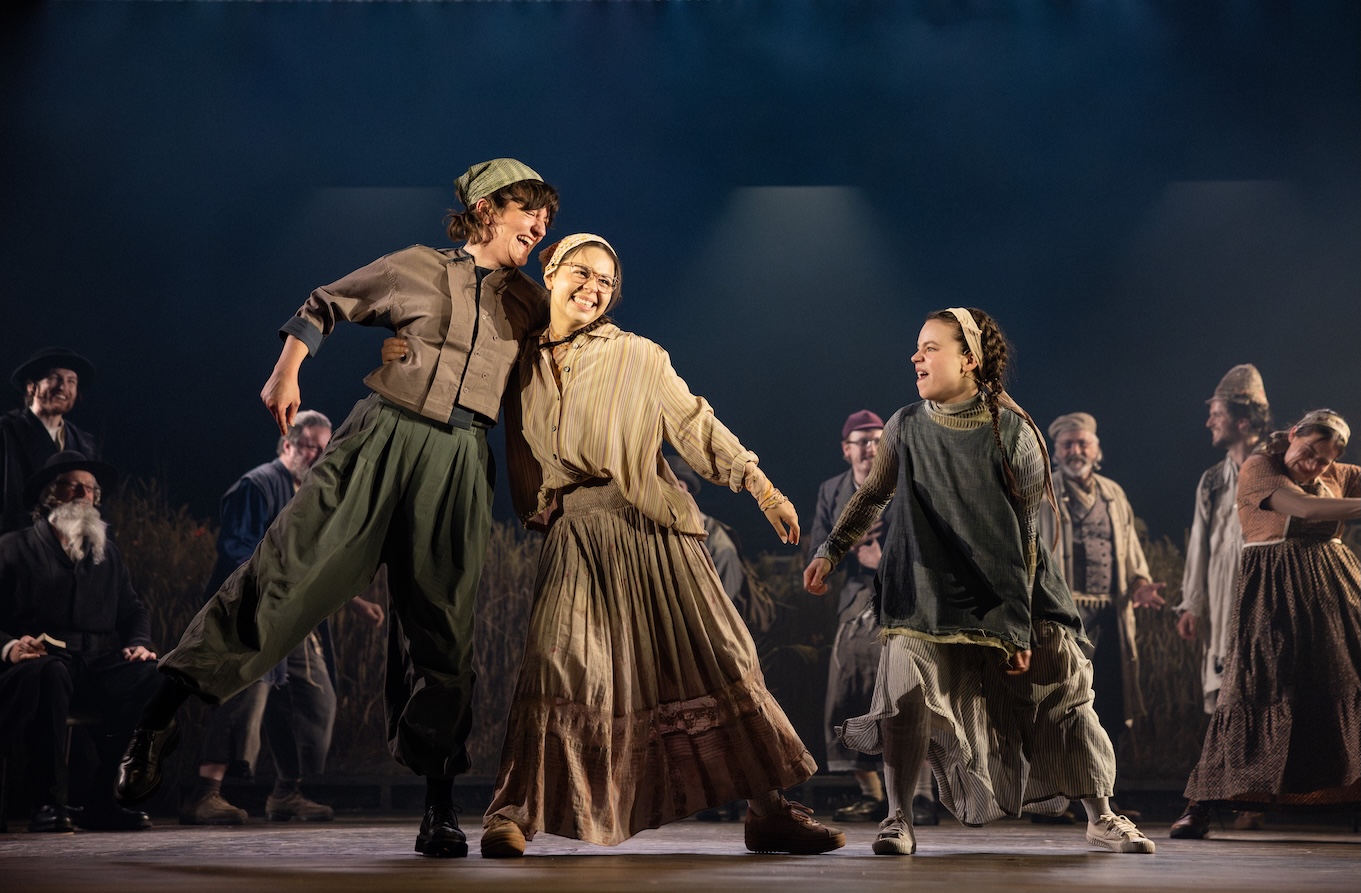
In the absence of set changes, the musical flows smoothly from scene to scene with an inevitable sense of organic life. Exactingly concise, Joseph Stein’s book, along wth the glorious songs of Jerry Bock (score) and Sheldon Harnick (lyrics) contains all that is needed to tell an engaging and entertaining story.
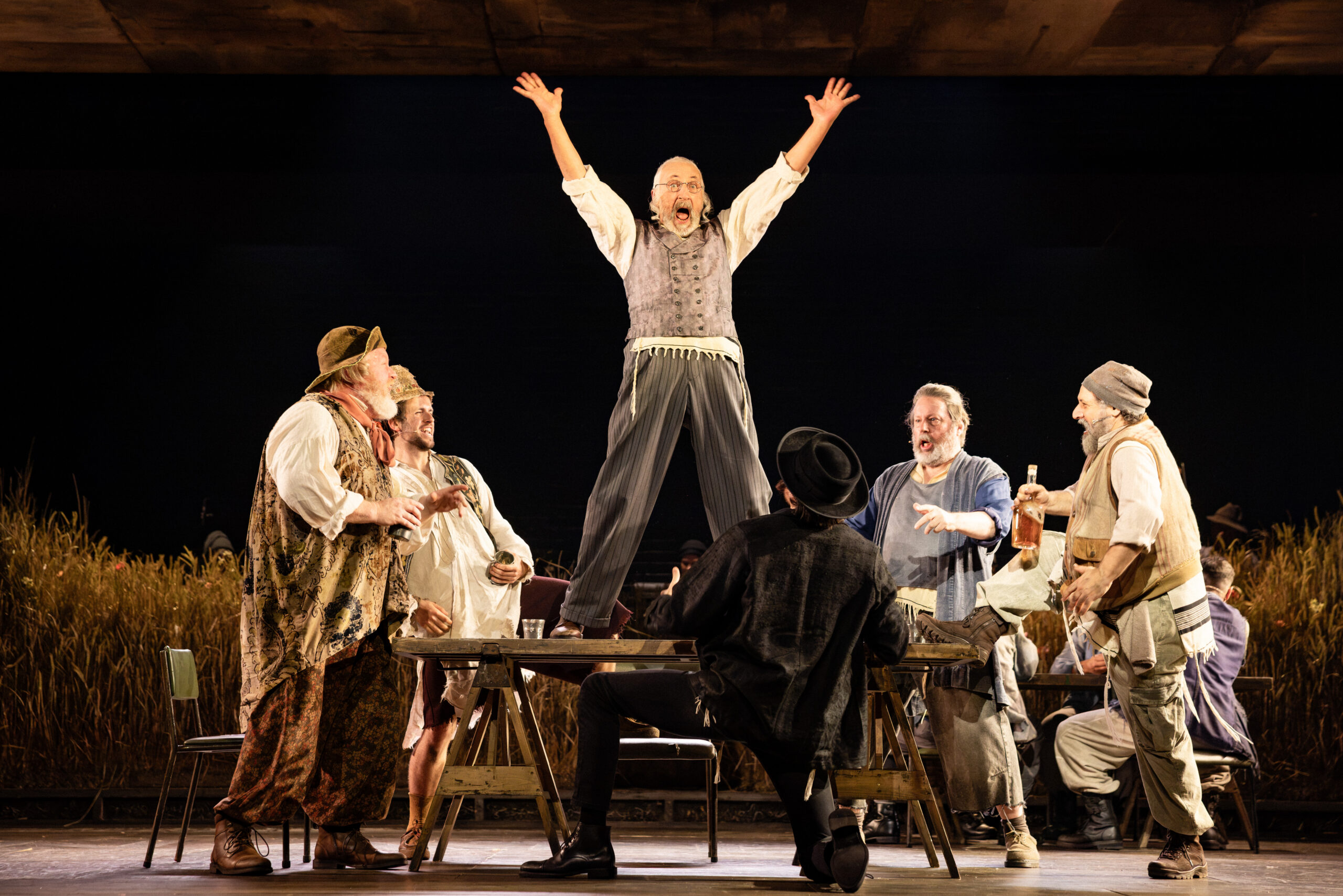
Fein’s naturalistic style extends to song, with characters commencing to sing as simply a heightened extension of the spoken word. As is customary in musical theatre, the next level of expression is dance, and choreographer Julia Cheng delivers spectacular sequences of dance erupting as a release of exuberant energy. The uneasy mingling of Jewish and Russian characters in “To Life” is an early highlight, with “Tevye’s Dream” a later thrill with its surreal stylings. Cheng retains the iconic “Bottle Dance” of Jerome Robbins’ original choreography then adds her own fabulous climax.
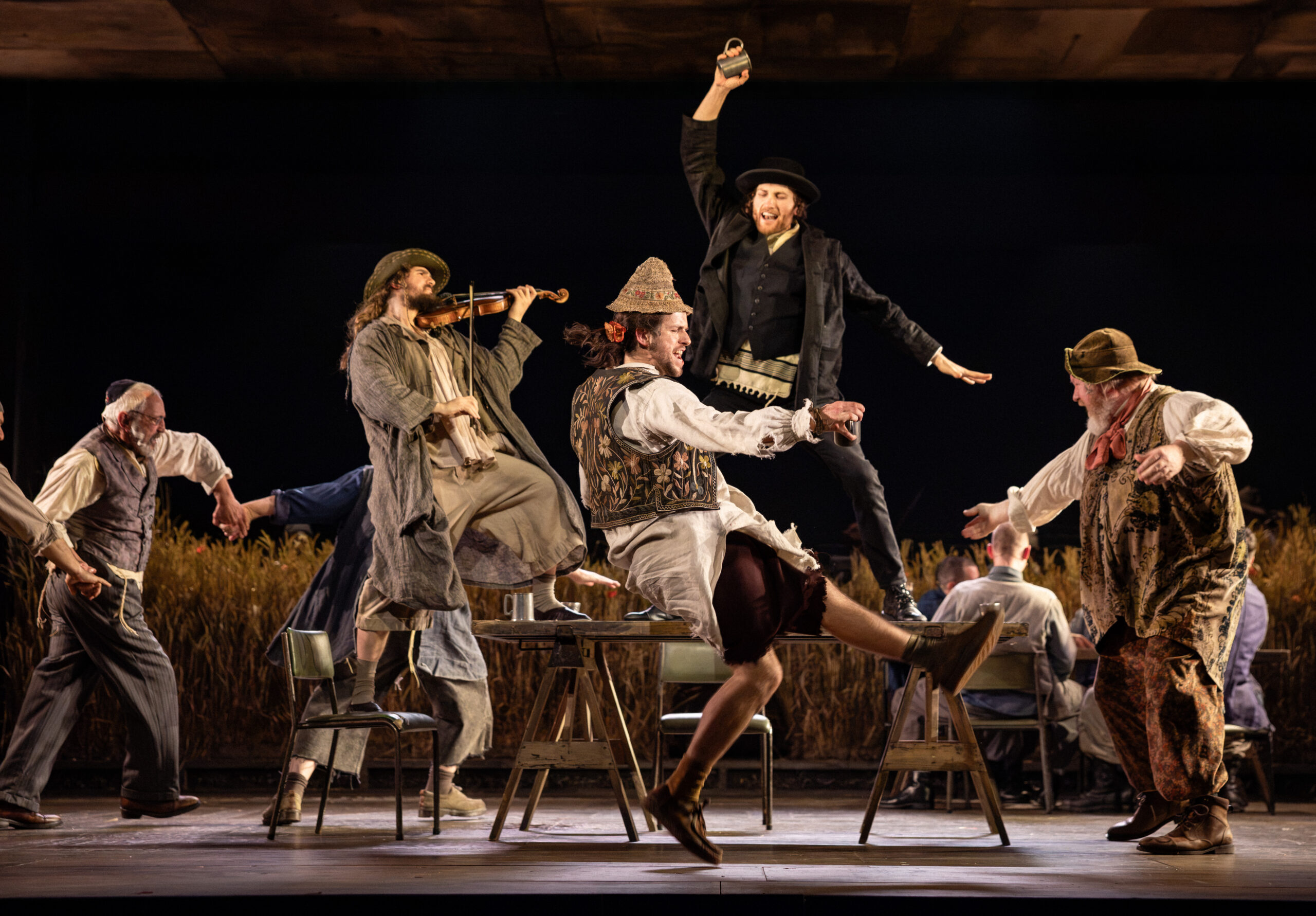
Musical supervisor Mark Aspinall contributes additional orchestrations, giving the band a wonderfully folksy klezmer sound. Musical director Dominic Woodhead leads the band onstage, their costumes adding to the cosy community feel. Vocal harmonies and dynamics are performed beautifully, with full company singing a true standout of the production.
The simple scenic design of Tom Scott is artfully complemented by the rich golden lighting design of Aideen Malone. In a particular highlight, Malone crafts the haunting image of the act one finale, in which the pogrom that disrupts Motel and Tzeitel’s wedding extends to the brutal burning of the surrounding wheat fields.
Scott’s costume designs eschew showy theatricality to convey a sense of everyday relaxed comfort. Every cast member plays a character and each of these are all distinctly identified in Scott’s individualistic designs.
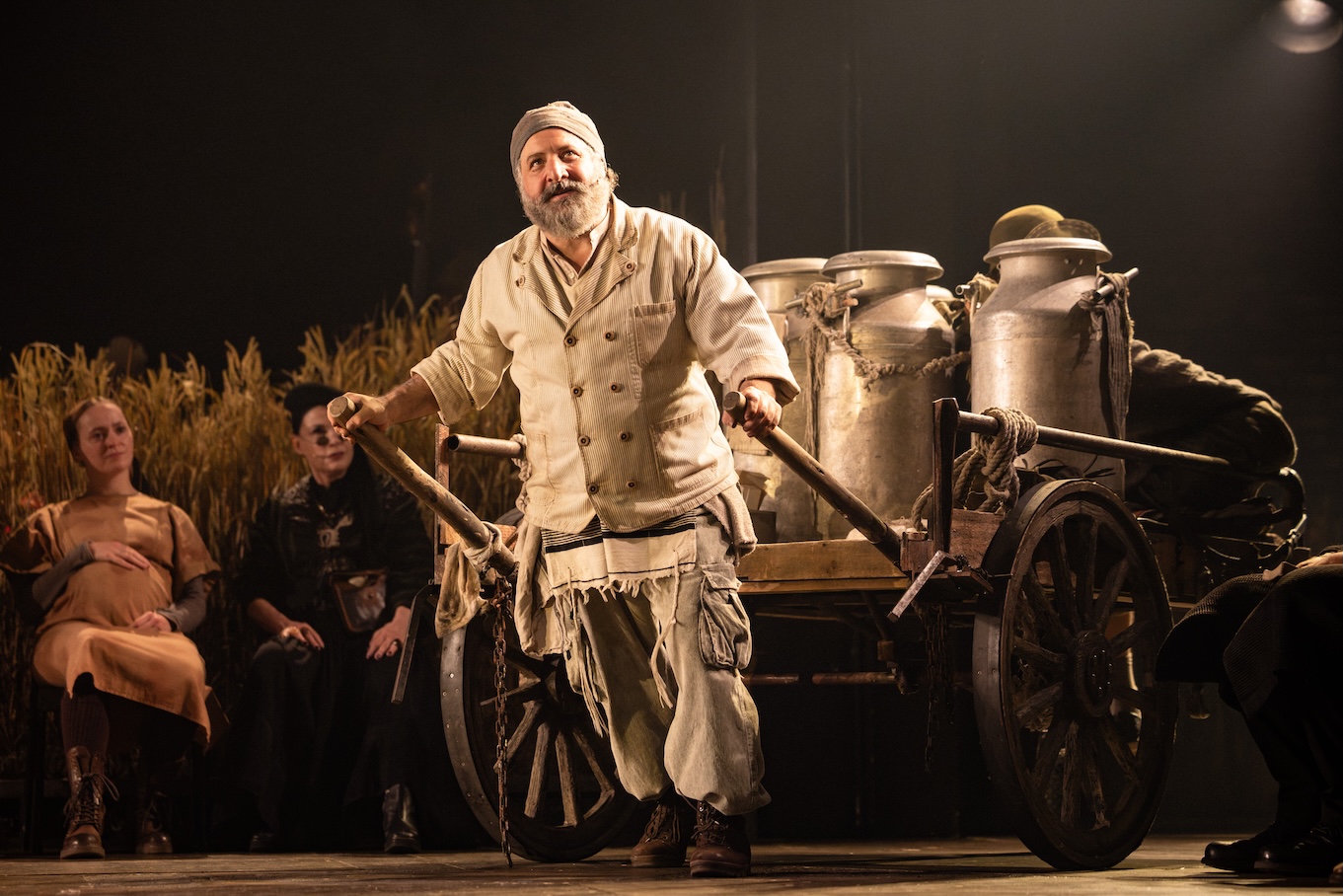
Having first performed on this stage at Her Majesty’s Theatre more than 40 years ago, Melbourne’s own Troy Sussman takes his rightful place as beloved patriarch Tevye. Confidently leading both the story and the company of actors, Sussman lives and breathes Tevye with a calm, natural performance. In a perfectly calibrated arc, Sussman has Tevye simmer and slowly steam at the changes to tradition, finally unleashing his full fury when third daughter Chava crosses a line he cannot accept in marrying a Russian. Tevye’s anger and bitter sorrow in these final scenes are keenly felt, leaving the audience all the more affected by the subsequent abrupt dissolution of the village itself.
Sigrid Thornton delights as Yente the matchmaker, projecting a deliciously mischievous twinkle in her eye. Veteran actor John Waters deftly balances humour and gravitas as butcher, and would-be groom, Lazar Wolfe.
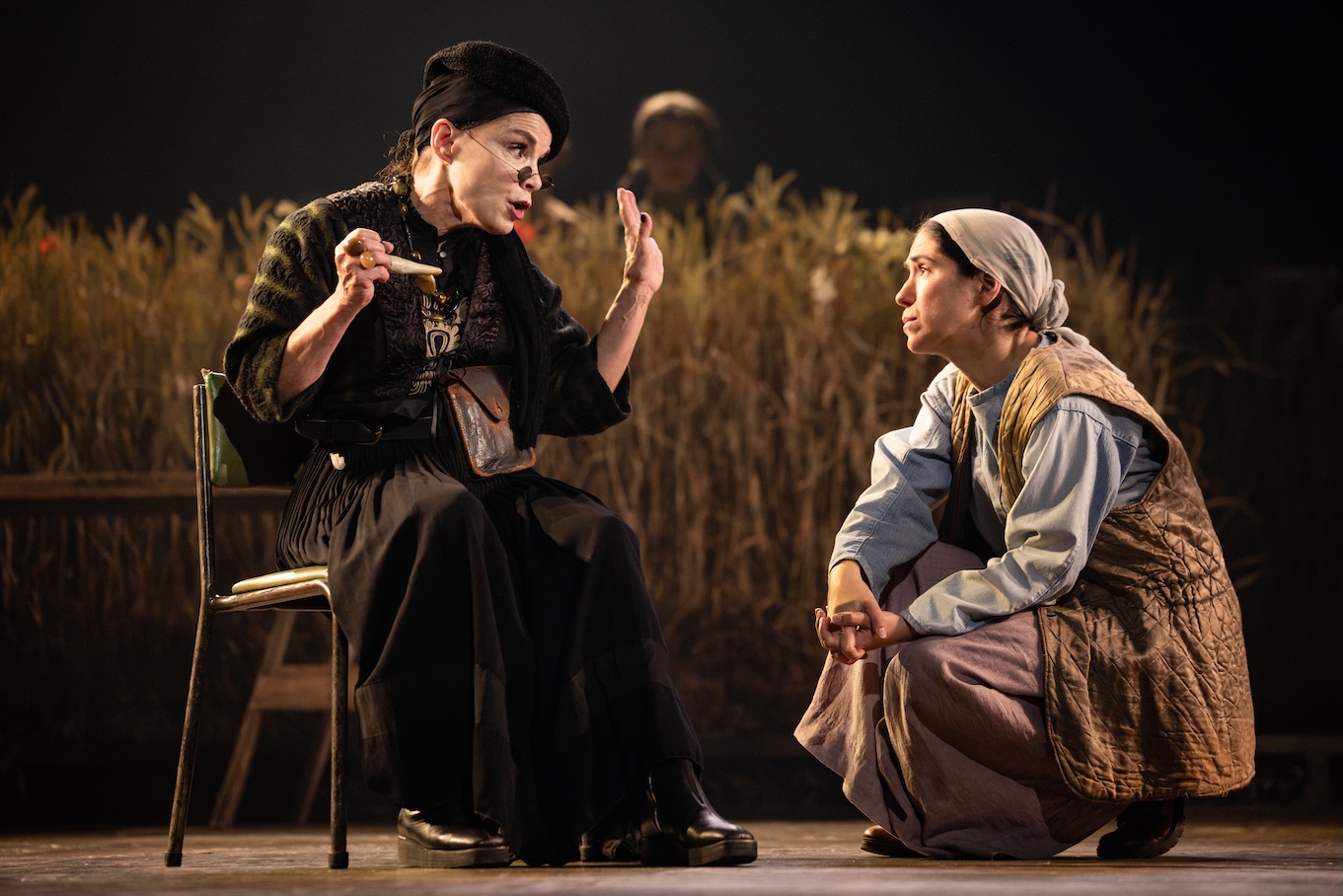
Alexis Fishman comes into her own in the final scenes as Golde affirms her feelings for her husband Tevye in the charming duet “Do You Love Me?”. The pace of earlier scenes make it hard for Fishman to establish a strong sense of Golde’s character. Fishman is particularly moving in final melancholic lament “Anatevka,” her unwillingness to leave her deserted home unswept an understandable and identifiable emotion.
Ellen Ebbs is well cast as Hodel, projecting an authentic curiosity and individuality for a young woman who would devotedly follow a poor student radical. Maxwell Simon gives a skilfully rounded performance as that radical, Perchik. A terrific triple threat and in-demand performer, Simon would appear to one breakout role away from becoming a high profile leading man.
With The Fiddler appearing in more scenes than usual, Ben Adler’s exquisitely expressive violin playing creates the beating heart of the musical.
Special mention to Rubin Matters for his amusing portrayal of Mendel, son of the Rabbi, with his quirky characterisation neatly continuing into all of his dance work.
Lovers of Fiddler on the Roof will surely enjoy this fresh take on the endearing classic.
Fiddler on the Roof plays at Her Majesty’s Theatre, Melbourne until 27 December 2026. For tickets, click here.
Fiddler on the Roof plays at His Majesty’s Theatre, Perth from 7 January 2027. For tickets, click here.
Photos: Daniel Boud
Categories: Music Theatre, Reviews

