
Potent 1963 play One Flew Over the Cuckoo’s Nest retains its searing humanity in this pitch perfect revival.
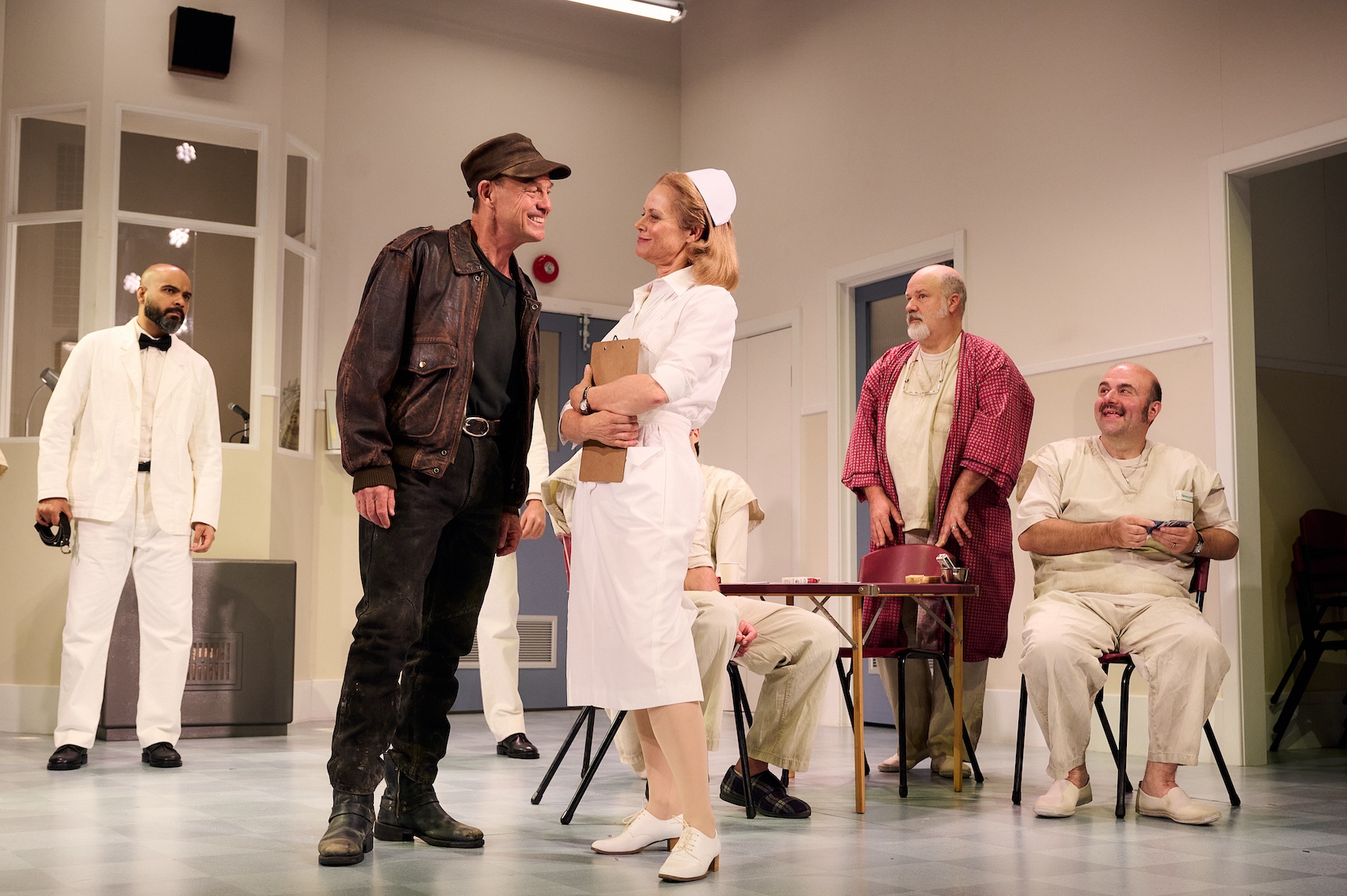
Best known for its multi-award-winning 1975 movie adaptation, One Flew Over the Cuckoo’s Nest is a time-honoured Dale Wasserman play, based on the 1962 novel by Ken Kesey. Regularly revived across the decades, the play is presented here in its original form, a time capsule to a blessedly bygone era when both understanding of and attitudes towards mental health were strikingly inferior to those of today.
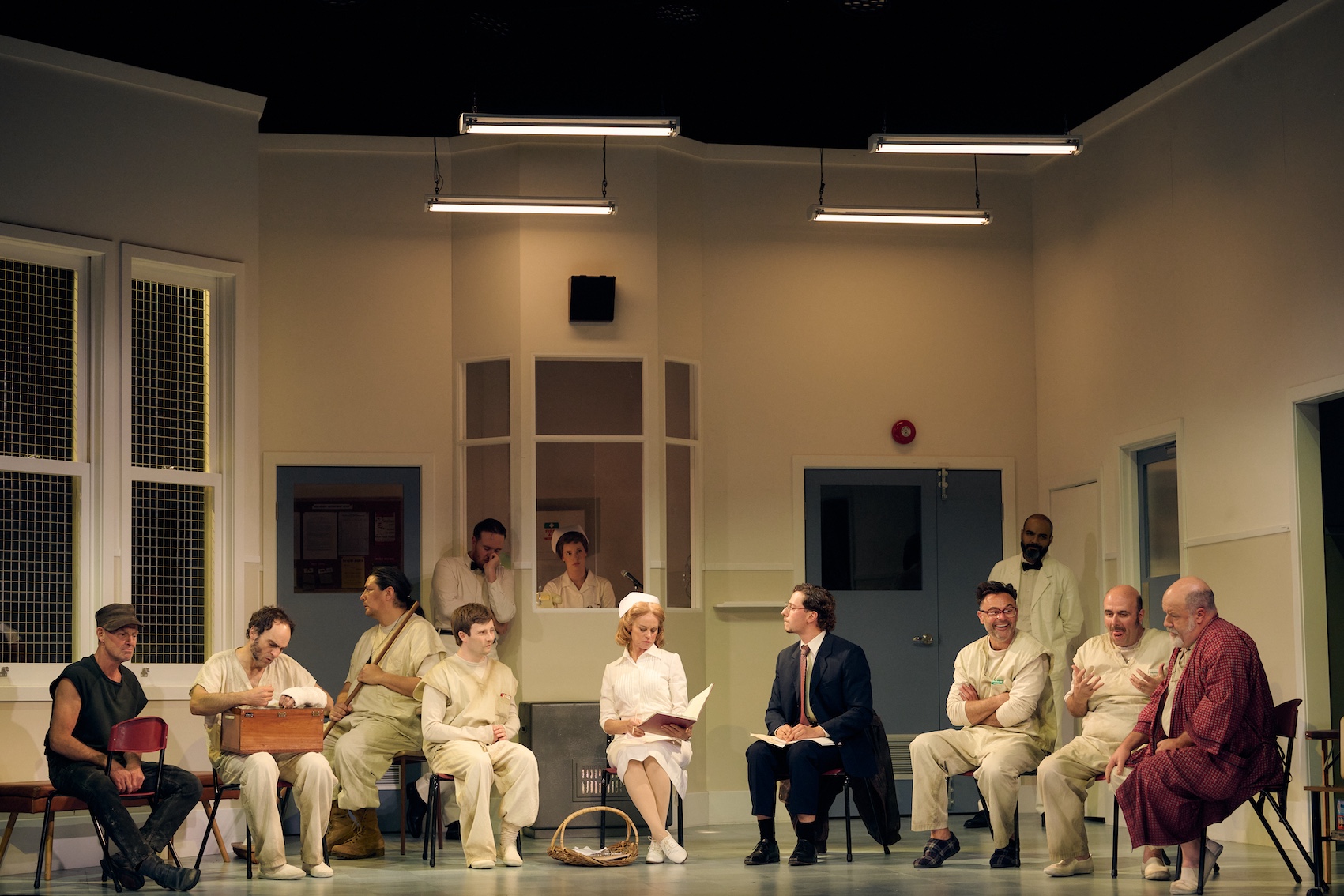
Watching the great success achieved in this production by veteran director Roger Hodgman, it is all too easy to credit the timeless themes and astute observations to the play itself. Wasserman’s economical script is certainly a gift for any director and cast, and this gift has been unpacked with razor sharp expertise by Hodgman. Staged on a completely realistic set, the motley collection of asylum patients and staff are briskly brought to vivid life, making the ensuing tragedies all the more emotionally impactful.
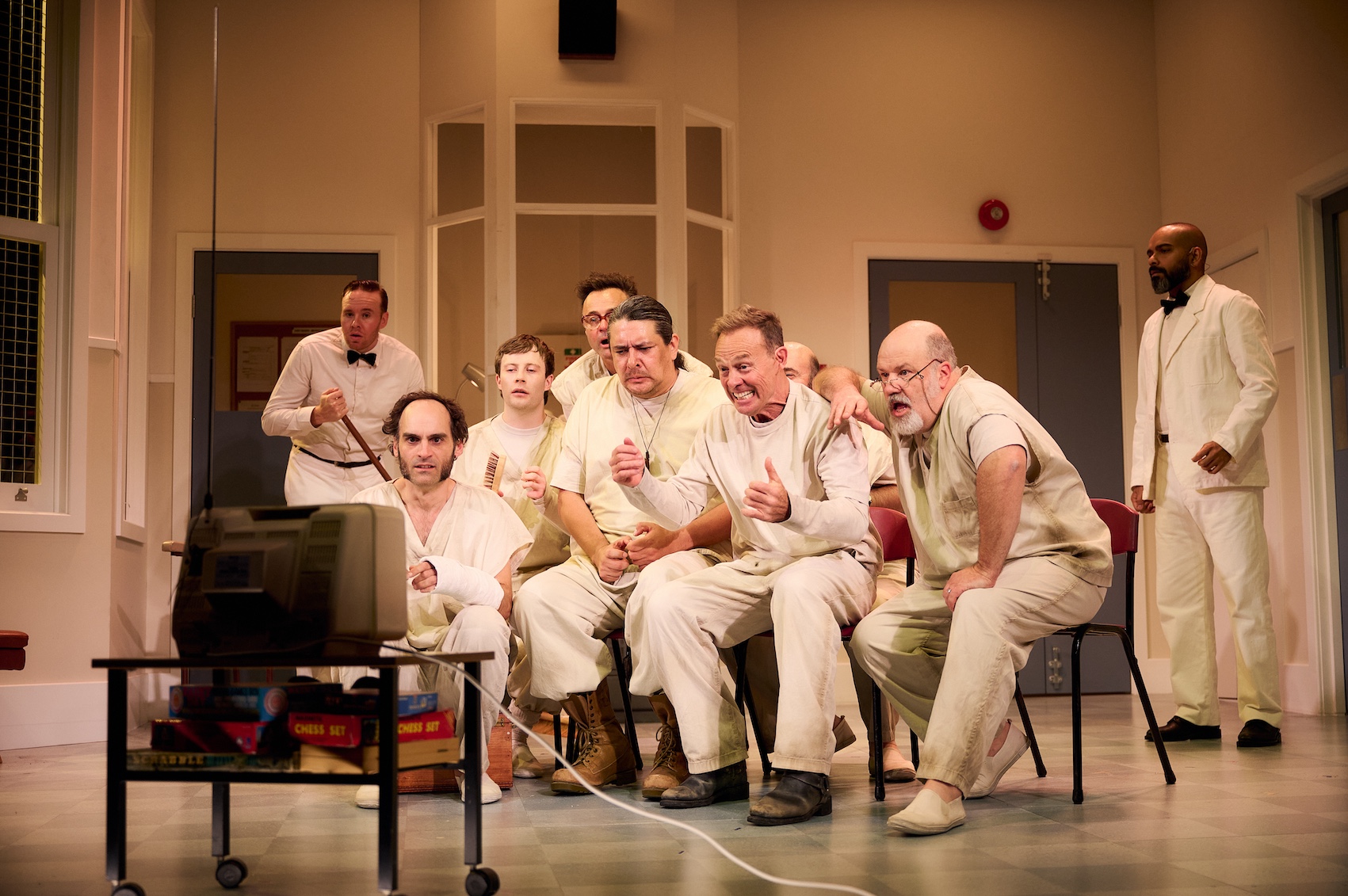
Wasserman’s deft touch for balancing drama and comedy is splendidly realised by Hodgman, ensuring a multitude of enjoyable moments amidst the more harrowing scenes. The era sees electroshock therapy and lobotomies not only in common practice but also subject to seemingly unregulated abuse. It is not only these treatments are as disturbing, but also the concept of homosexuality as a mental disorder, giving the audience cause to reflect and celebrate upon modern advancements in treatment of mental health, much as there always remains further progress to be achieved.
Set designer Richard Roberts has crafted a highly functional, almost depressingly realistic mental ward set. Costume designer Ella Butler further grounds the story in 1960s practicality, with splashes of colour from a pair of young female visitors who clearly belong to the swinging 1960s going on outside the facility. Lighting designer Niklas Pajanti completes the picture with institutional white lighting, offset by urgent red when the alarms are sounded and shimmering blue when elder Native American Chief Bromden communes with his Father.
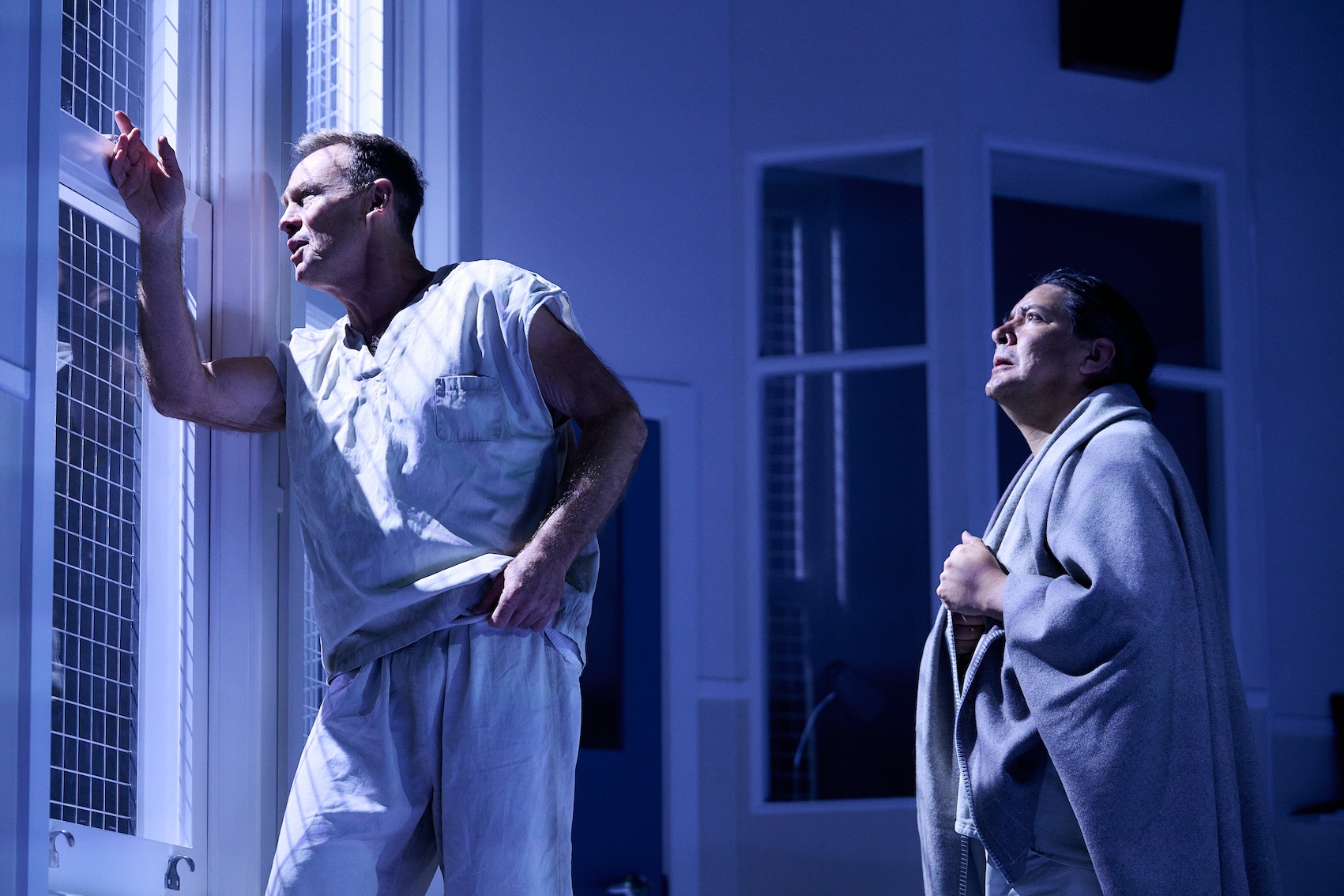
The expert work of sound designer Marcello Lo Ricco allows for natural speech patterns and dynamics, eschewing the sort of heightened vocal projection that reminds everyone that we are watching a Play, allowing the audience to really feel like a fly on the wall in the asylum. The tension is enhanced by the judicious use of original music by Kohan van Sambeeck, which is particularly successful during the soliloquies of Chief Bromden.
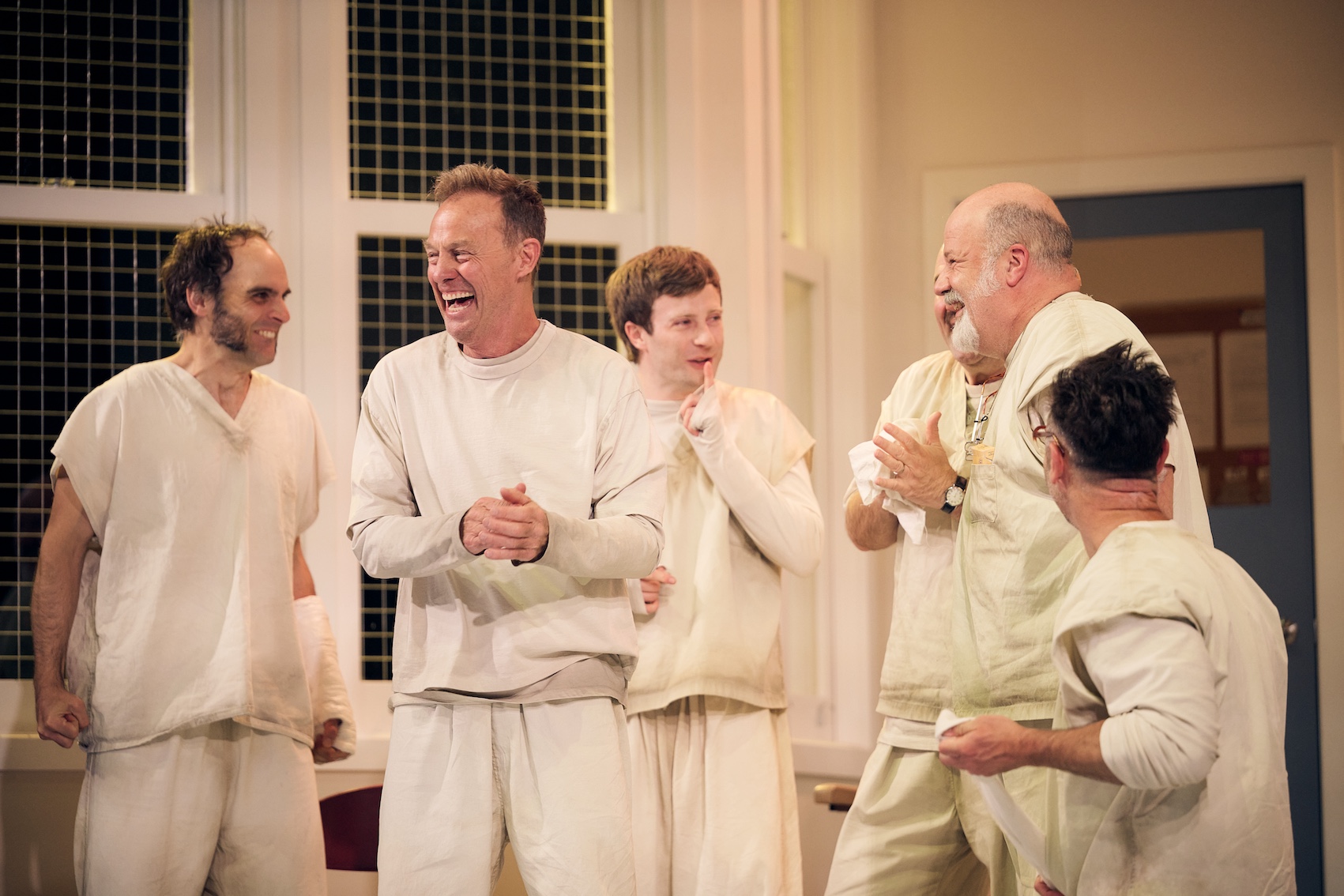
At the heart of Wasserman’s drama is the classic protagonist / antagonist battle between unruly new patient Randle P. McMurphy and domineering Nurse Ratched. Ratched is a villain hiding in plain sight, manipulating and tormenting the inmates in the name of “treatment” for what is presumably her own twisted enjoyment. Quick to see the true colours of Ratched, McMurphy achieves far more progress with the men in his own exuberant way; there is tension in the progress but the successes are a true joy to behold.
McMurphy and Ratched each set themselves a mission to bring the other down, a showdown for which, of course, there can be no true winner.
Belying his distant golden pin-up boy origins, Jason Donovan proves himself a true character actor in the irresistibly showy lead role of McMurphy. In a natural and largely understated performance, Donovan has the audience fully on his side and achieves palpable chemistry with every fellow performer.
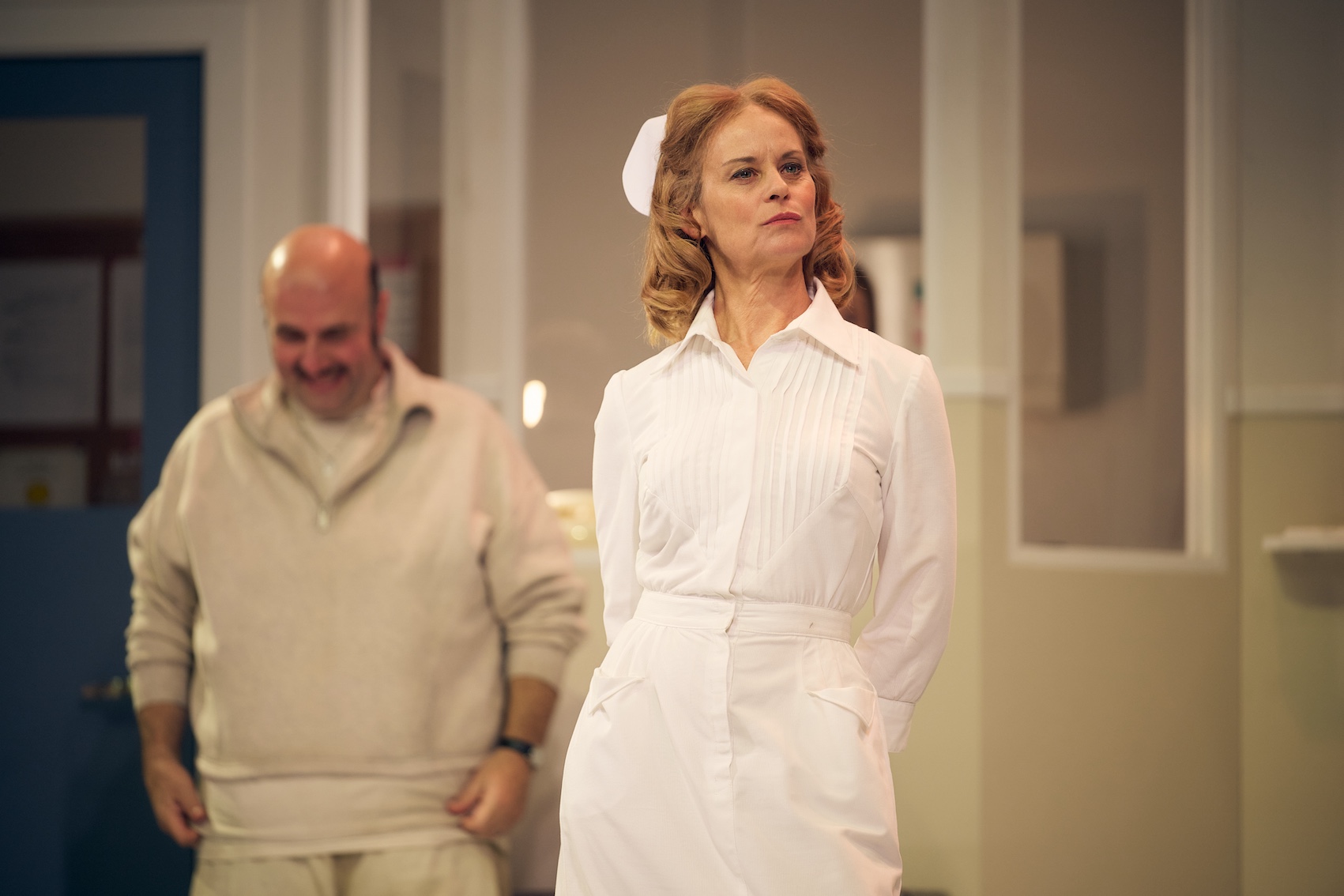
Nadine Garner reinvents Nurse Ratched as a petite blue eyed blonde, her demure stature serving to disguise the pleasure she derives from the power she wields. Garner successfully portrays the nurse as a woman in full belief that her ways serve the patients and staff, wielding her simmering sexuality over patients and staff members alike.
In an extraordinarily perfect piece of casting, Jeremy Proulx brings Chief Bromden to life with a culturally appropriate, highly respectful performance. Towering over the rest of the cast, Proulx’s touching characterisation of a man who does not believe he is big enough leads to a cathartic arc of eventual self sacrifice and self belief.
Every cast member brings unique aspects to the roles, both entertaining and endearing. David James hides Harding’s homosexual heartbreak behind plummy, pompous tones. Daniel R. Nixon achieves the rare feat of playing a stutterer, the young Billy Bibbit, with natural believability. Gyton Grantley brings a mix of devilish and fearful energy to Cheswick. Strong support continues with Martin Blum as paranoid Scanlon, John Xintavelonis as delusional Martini, and Christopher Connelly as beyond repair Buckley.
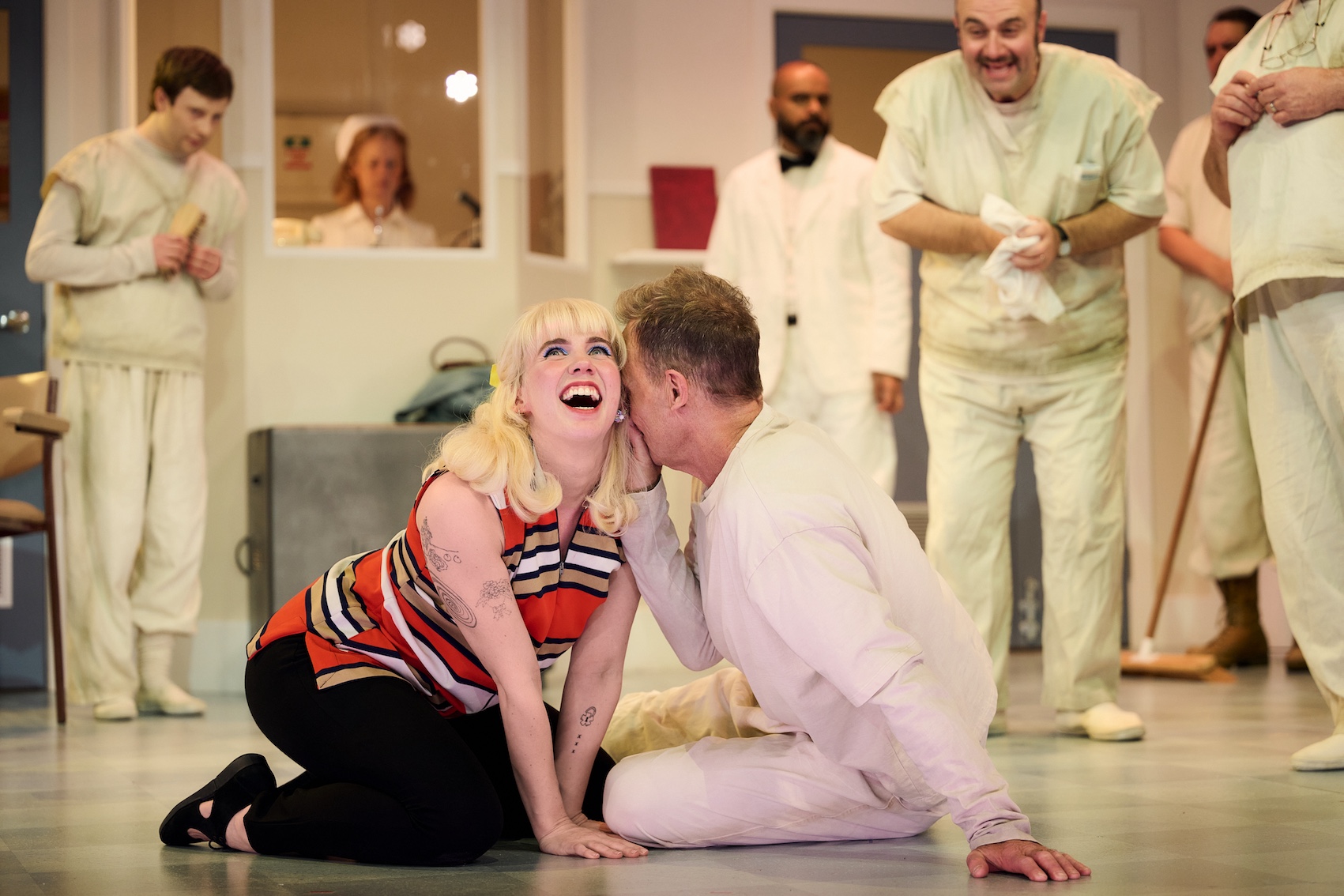
Darcey Eagle brings a welcome injection of lively energy in her memorable pair of scenes as the colourfully named Candy Starr. Mia Dabkowski Chandler impresses in twin roles, her good time girl Sandra completely unrecognisable from her earlier role as timid Nurse Flynn.
Harvey Almond deftly conveys the overworked weariness of Dr Spivey, engaging in fascinating power plays of his own with Nurse Ratched. Jack Scott and Deep Sora round out the cast as diabolical Aides Williams and Warren, each as deceptively and cowardly wicked as Disney cartoon villains.
As entertaining as it is thought-provoking, this generously produced season of One Flew Over the Cuckoo’s Nest is a very welcome addition to the Melbourne stage.
One Flew Over the Cuckoo’s Nest plays exclusively at Athenaeum Theatre, Melbourne until 20 December 2026. For tickets, click here.
Photos: Eugene Hyland
Categories: Reviews

